Jump to content

  • Log in with Facebook Log in with Twitter Log In with Google      Sign In   
  • Create Account


To go ad-free join as a Member.


* * * * * 2 votes

Cryoprotectant Research: Questions

project

  • Please log in to reply
6 replies to this topic

#1 OFFLINE   caliban

  • Member
  • Others: Admin
  • 6,344 posts
  • 1,567
  • Location:UK
Donor

Posted 12 January 2012 - 11:51 PM

As usual, please bear in mind that the first thing we want these researchers to do is to focus on life-extension research, so please give them some time to answer.

#2 OFFLINE   brokenportal Re: Cryoprotectant Research: Questions

  • Director TeamCoordinator
  • 6,882 posts
  • 360
  • Location:Stevens Point, WI
Donor

Posted 29 January 2012 - 12:48 AM

Here's a question: How hard do you anticipate your project will be in comparison to other research you have done?

#3 OFFLINE   jpnitya Re: Cryoprotectant Research: Questions

  • Member
  • 10 posts
  • 7
  • Location:Liverpool, UK

Posted 02 February 2012 - 01:07 AM

from a technical perspective I don't think it will be very hard since we are familiar with most of the methods to be used in this project.  I suspect the hardest part is going to be the interpretation of the results, in part because so little has been done along these lines of work.  in that sense, sharing the results with the LongeCity community may prove beneficial because its members may find patterns and insights in our results that we would otherwise miss.

#4 OFFLINE   AgeVivo Re: Cryoprotectant Research: Questions

  • Member
  • Others: Engineer
  • 1,383 posts
  • 826
Donor

Posted 02 February 2012 - 09:24 PM

View Postjpnitya, on 02 February 2012 - 01:07 AM, said:

sharing the results with the LongeCity community may prove beneficial because its members may find patterns and insights in our results that we would otherwise miss.
can't resist to say how great this sounds!

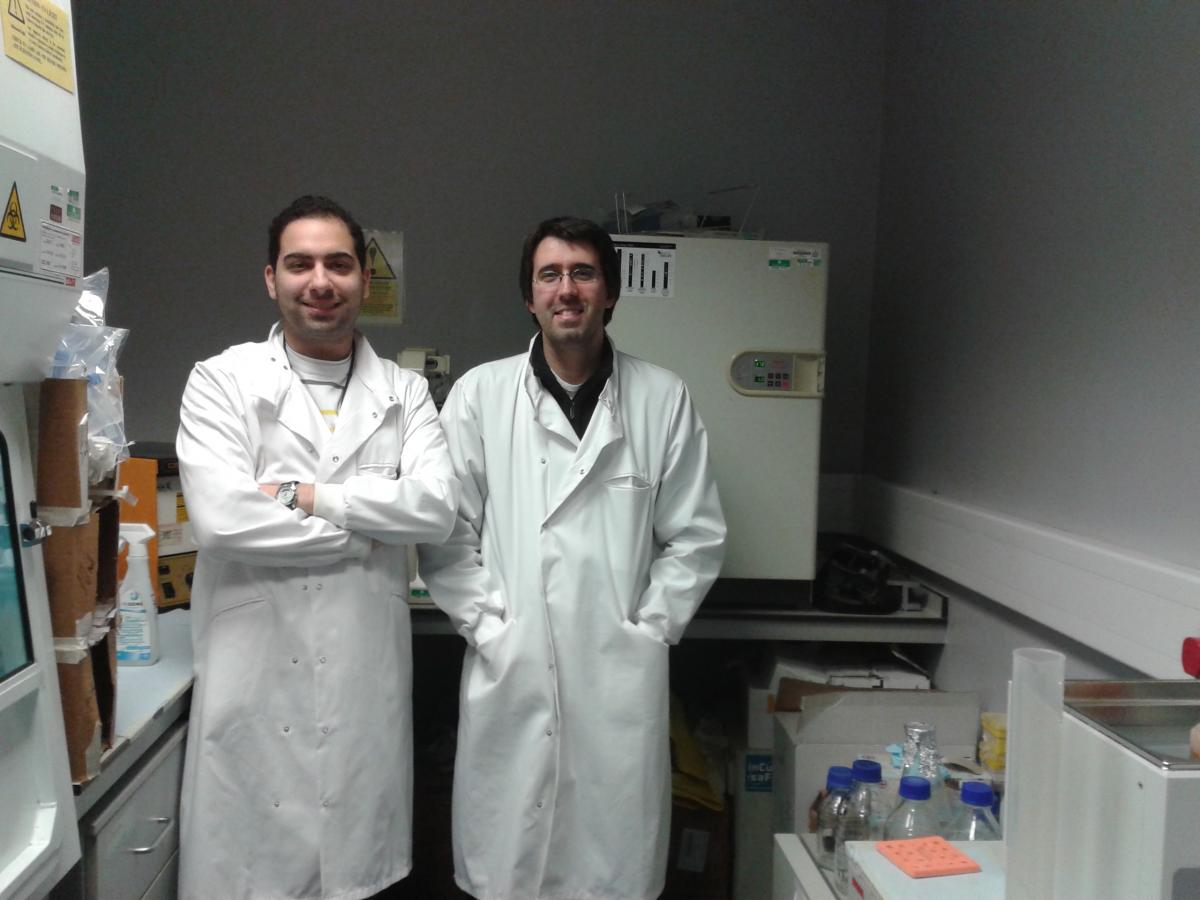
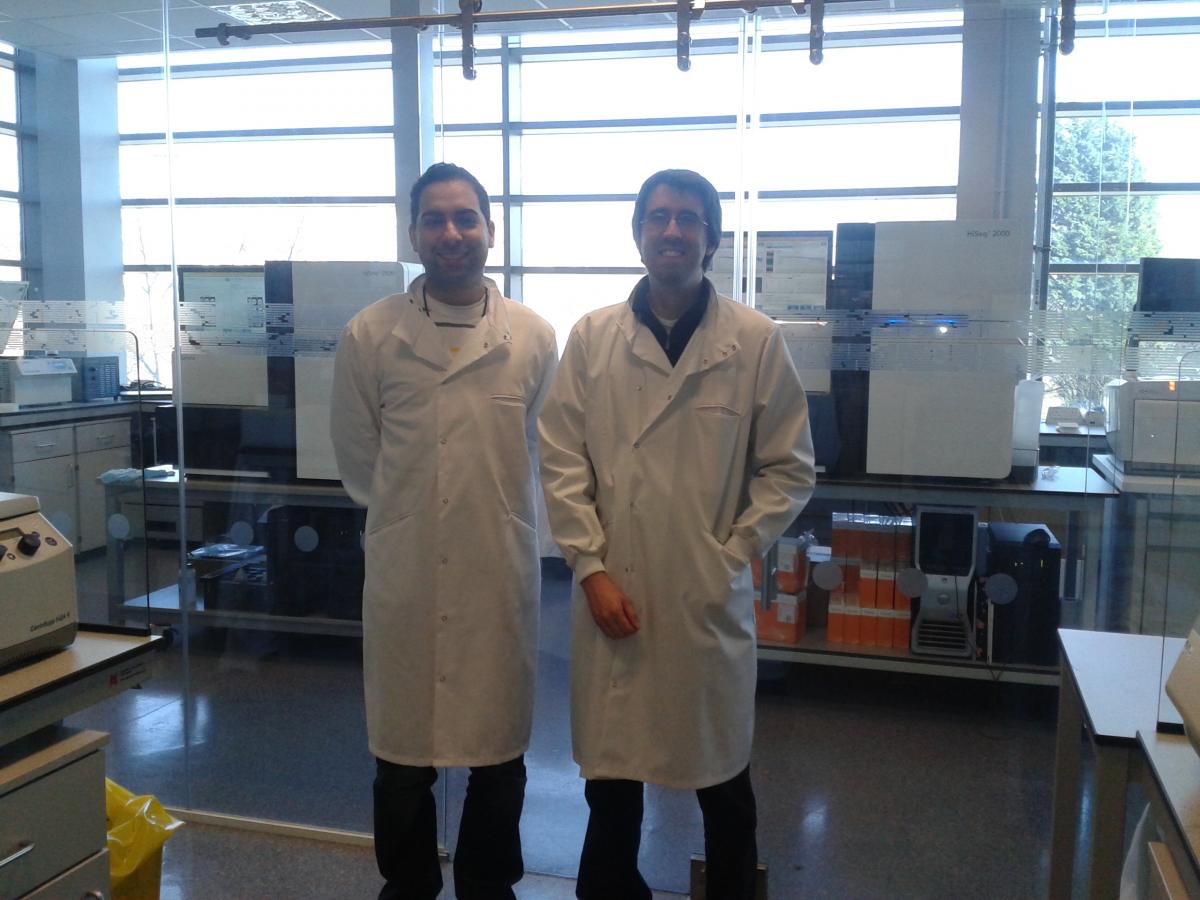
If from time to time you can post a picture of how you do the experiment, that may also help lots of members learn/understand/suggest/project themselves in such work

#5 OFFLINE   jpnitya Re: Cryoprotectant Research: Questions

  • Member
  • 10 posts
  • 7
  • Location:Liverpool, UK

Posted 03 February 2012 - 10:43 AM

View PostAgeVivo, on 02 February 2012 - 09:24 PM, said:

If from time to time you can post a picture of how you do the experiment, that may also help lots of members learn/understand/suggest/project themselves in such work

I have to say that visually it doesn't look as exciting as it sounds.  most of what we do is on small petri dishes and eppendorfs which look really dull.  we could try to get some pictures of cells under the microscope, though, and post them -- these may look more exciting.

#6 OFFLINE   treonsverdery Re: Cryoprotectant Research: Questions

  • Registered User
  • 991 posts
  • 85

Posted 10 February 2012 - 07:49 PM

here is a daffy question, cryopreservatives need to diffuse, so does adding a little natural membrane detergent, like some membrane lipid,  make them travel more thoughouly through tissues.

also, thinking of revival effectiveness, there may be categories of value.  perhaps a thawed organism would most benefit from DNA, mRNA, tRNA intactness, as compared with say membrane intactness, (others might possibly prefer membrane intactness)  Thus prioritizing what you want to thaw right could guide the creation of the chemistry.

Ive read that melatonin preferentially accumulates at the nucleus, thus a cryopreservative molecule like a glycol attached to melatonin might measurably preserve the nucleus more effectively which sure sounds important or better.

memories are linked to mRNA production, thus the crypreservation of the "immediate protein environment going on" with mRNA might conserve some mood or beingness among the thawed creatures

As a rapid development approach, even if you just crypreserve a tardigrades, perhaps you could teach them to swim towards a particular color light, then show the ones with mRNA cryopreservative retained their learning more effectively. That would tell the humans there is a cryopreservative better at preserving memory.

Ive heard the chemical ethidium bromide intercalates with DNA, possibly there is a less forceful similar molecule, or possibly a generic very brief siRNA  that would lazily reversibly glom mRNA making it more freezeproof.

Edited by treonsverdery, 10 February 2012 - 07:51 PM.


#7 OFFLINE   jpnitya Re: Cryoprotectant Research: Questions

  • Member
  • 10 posts
  • 7
  • Location:Liverpool, UK

Posted 15 February 2012 - 02:55 PM

I think those are interesting ideas but there is a lot that we don't know about so it's very hard to say for sure.  I would guess that preserving cell viability is the most important thing and for this you need membrane integrity as well as DNA integrity and maybe to a lesser degree mRNA integrity.

I don't know if memories are linked to mRNA production. My understanding is that memories are linked to synapses. Do you have a reference on this?


Also tagged with project

1 user(s) are reading this topic

0 members, 1 guests, 0 anonymous users