(found here)
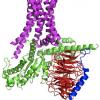
A group of proteins, known as sirtuins (we, mammals, have seven of these), has been thought to play a role in the aging process. However, recently, the effects of one of these proteins on aging has been challenged, leading to questions concerning the role of the whole protein group (see this Nature News article for some background).
Now, however, a new study, also in Nature, has shown that one of the sirtuins (SIRT6) does have an effect on the lifespan of mammals (in this case, mice). In the design of their experiments, the authors were well aware of the controversy surrounding the proteins. From the article:
There is much doubt about whether mammalian sirtuins regulate lifespan. Moreover, in the fly and nematode, a recent study challenged the role of sirtuins in regulating lifespan, claiming that the increased longevity observed in strains with SIR-2 overexpression is caused by differences in genetic background or by mutagenic effects of transgene insertion.
The authors tried to take this into account in their experiments:
To address potential complications owing to strain-specific effects and integration sites, we used a segregating background with equal contributions from the C57BL/6J and BALB/cOlaHsd mouse strains and studied two separate lines. Indeed, we showed that SIRT6 extends male lifespan regardless of the integration site and in two control lines with different lifespans. Here, we reveal a role for the mammalian sirtuin SIRT6 in regulating lifespan.
The main effect of SIRT6 was a reduction in serum levels of IGF-1 and higher levels of IGF-1 binding proteins, components of a key pathway in lifespan regulation. On average, the mice overexpressing SIRT6 showed an increase in lifespan of about 15%.
Interestingly, as you might have noticed in the previous quote, the effect of SIRT6 on lifespan was only noticeable in male mice. As the authors note:
Most genetic modifications of the IGF1 or insulin signalling pathway affect the lifespan of both genders or show a stronger effect in females. Yet here the effect of SIRT6 on IGF1 signalling was male specific. Therefore, further research is required to determine whether the effects of SIRT6 are blocked in females rather than enhanced in males.
Overall, it is concluded that:
Taken together, our findings suggest that SIRT6 is an important regulator of mammalian longevity and indicate the feasibility of manipulating SIRT6 levels to treat age-related diseases.
Reference
Kanfi, Y.; Naiman, S.; Amir, G.; Peshti, V.; Zinman, G.; Nahum, L.; Bar-Joseph, Z. and Cohen, H.Y. (2012). The sirtuin SIRT6 regulates lifespan in male mice. Nature. Published online 22 February. doi:10.1038/nature.10815.
Edited by Dystopya, 29 February 2012 - 08:38 AM.