
Jump to content

  • Log in with Facebook Log in with Twitter Log In with Google      Sign In   
  • Create Account


To go ad-free join as a Member.


- - - - -

Fasting concerns and note about dosing regimes in the rats


  • Please log in to reply
4 replies to this topic

#1 OFFLINE   cbohrson

  • Registered User
  • 16 posts
  • 16
  • Location:Baltimore

Posted 11 August 2012 - 04:25 PM


Hi guys

This is the first time I'm posting in this forum, so I apologize if I'm reposting something.   I've read through most of these threads but I may of missed something.  This topic has certainly been touched on before, but I wanted to get more to the point in this thread.

My first minor point: based on my read of the paper I see no reason that fasting could have been a confounding factor in the life extension part of the experiment documented in the paper.  The line regarding fasting the rats overnight only appears in the section titled "Pharmokinetics" in which the researchers document sacrificing those same rats 48 hours later for organ collection.  As far as I can tell, this was a totally different experiment.  These are not the same rats actually used in the life extension study.  The methods we're interested in are in the section entitled "2.3 Chronic toxicity and effects of C60 on survival of rats."

Now, for my next, more important point, a quote from the original paper:

2.3. Chronic toxicity and effects of C60 on survival of rats
The rats were housed three per cage and acclimated for 14 days, before dosing.  Three groups of 6 rats (10months old, weighing 465±31 g) were administered daily for one week, then weekly until the end of the second month and then every two weeks until the end of the 7th month, by gavages with 1 ml of water or olive oil or C60 dissolved in olive oil (0.8 mg/ml), respectively.

I read this as the dosing was relatively infrequent most of the time, and also short relative to the lives of the rats. By the end of month 17, no rats were getting any more C60.  Nevertheless, we still observed this significant lifespan increase, which is especially promising since C60 is said by the authors to be cleared from the GI tract in 10s of hours.

"Pharmacokinetic studies show that dissolved C60 is absorbed by the gastrointestinal tract and eliminated in a few tens of hours." (from the abstract)

Based on what people have been experimenting with in animals and themselves it seemed like this point about dosing was not well understood, so I just wanted to make it clear to everyone.

Reason for optimism?
#2 OFFLINE   Metrodorus Re: Fasting concerns and note about dosing regimes in the rats

  • Registered User
  • 168 posts
  • 60
  • Location:London

Posted 11 August 2012 - 04:49 PM

I'm not quite sure what point you are trying to make?

#3 OFFLINE   hav Re: Fasting concerns and note about dosing regimes in the rats

  • Member
  • 442 posts
  • 79
  • Location:Cape Cod

Posted 11 August 2012 - 05:04 PM

The biggest cause for my own optimism is that the type of rats used in the study normally die of cancer and that their lives were extended by c60/evoo by 90%. Combined with the study's finding that c60/evoo was nontoxic at the dosages employed.  And the fact that the longevity continued long after dosage ended leaving a rather interesting door wide open.  But there are allot of unknowns.  Particularly the mode of operation.  And how to translate the dosages employed from rats to humans. I don't think the study even documented what eventually killed the c60 treated rats... cancer or just ordinary old age.  Perhaps its all the open questions that most invite the imagination to run wild.

Howard

#4 OFFLINE   cbohrson Re: Fasting concerns and note about dosing regimes in the rats

  • Topic Starter
  • Registered User
  • 16 posts
  • 16
  • Location:Baltimore

Posted 11 August 2012 - 05:33 PM

View PostMetrodorus, on 11 August 2012 - 04:49 PM, said:

I'm not quite sure what point you are trying to make?


I'm assuming you're talking about the second point here instead of the first, in which I was just trying to allay concerns over the idea that intermittent fasting effects may have confounded the results.

I wanted to make sure people understood that the results of the study were from just a 7 month period of supplementation, and that for most of that period the rats were only being dosed once every two weeks. I thought it was reason for optimism because such a modest intervention caused such a pronounced effect, but I guess I was also trying to caution people about rapidly trying out daily regimens, especially since there has been no animal study in which chronic daily administration has been examined over a period lasting longer than 1 week.  We all hope for more effect with higher or more frequent doses, and I personally expect that to be the case, but there might be a hidden j-curve.

#5 ONLINE   niner Re: Fasting concerns and note about dosing regimes in the rats

  • Member, Moderator
  • 12,404 posts
  • 1,685
  • Location:Philadelphia

Posted 12 August 2012 - 12:08 AM

View Postcbohrson, on 11 August 2012 - 05:33 PM, said:

I'm assuming you're talking about the second point here instead of the first, in which I was just trying to allay concerns over the idea that intermittent fasting effects may have confounded the results.

I wanted to make sure people understood that the results of the study were from just a 7 month period of supplementation, and that for most of that period the rats were only being dosed once every two weeks. I thought it was reason for optimism because such a modest intervention caused such a pronounced effect, but I guess I was also trying to caution people about rapidly trying out daily regimens, especially since there has been no animal study in which chronic daily administration has been examined over a period lasting longer than 1 week.  We all hope for more effect with higher or more frequent doses, and I personally expect that to be the case, but there might be a hidden j-curve.

The fact that the treated animals didn't lose weight relative to the controls is the best way to rule out crypto-CR, and Baati reported that the animals didn't lose weight.  If anything, they weighed more.

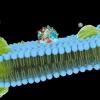
I'm not sure that this was really a modest intervention; the rats got 1.7mg/kg, which if translated directly to a human would be quite a lot.  That's what Anthony Loera is taking, which for him is 130mg per dose; about 4/5 of a cup of olive oil.  (Eek!)  From what people are reporting, it sounds like it takes very little C60 to show beneficial effects.  There are a number of positive reports from doses in the 1.5-2mg range, but the frequency of reports of positive effects doesn't go up as dose is increased.  It looks like the best predictor of a positive response is being familiar with your limits prior to C60, then testing those limits.  It's particularly easy to spot if you were in bad shape, so your limits were low and easy to exceed.   At any rate, I think that chronic daily dosing in this particular case is quite similar to infrequent dosing with larger amounts.   The large doses would certainly be expected to load mitochondrial (and other) membranes more heavily, and it would make sense that it would take a lot longer for a heavy C60 load to wash out than a light load.  In the case of Baati's rats, my hypothesis is that it either took a couple years for the membrane loading to drop below the critical threshold, or perhaps the rats died of some other process before the C60 level got too low.  It would have been very interesting if they could have had a group of rats that were dosed at a lower level for as long as they stayed alive.  Note the difference between classic pharmacokinetics, where you are looking at the rate at which a drug disappears from plasma or other fluids, the the kinetics of membrane de-saturation that I'm talking about.  The classic PK of C60-oo shows half times of ~10 hours, but the membrane kinetics are far far slower.


1 user(s) are reading this topic

0 members, 1 guests, 0 anonymous users