 PREFACE

This is the first part of a two-part series of blog entries. It describes causal processes of human aging, as typical from birth to approximately 100 years of age. This description provides a comprehensive framework that is sufficient to explain all known aspects of human aging. There may be other applicable frameworks, but this one is all that is necessary to describe the fundamental processes and is applicable to other organisms  beyond humans as well. This blog entry also outlines a number of interventions and activities that can help fundamentally healthy people have a high likelihood of reaching 100 or so years of age, remaining healthy and functional, cognitively all there, and working and contributing to their families and society. These activities and interventions are the ones that have been are working for me. My 96th birthday was 11-18-2025, and I expect to keep working and contributing until I am at least 100.
Much of the material in this blog entry was originally published two years ago in the 27 September 2023 blog entry, Unlocking Longevity. What was written there is mostly still cogent and modified here minimally. This material is prerequisite to understanding the Part 2 blog entry. MECHANISMS OF AGING AND INTERVENTIONS FOR LONGEVITY PART 2: MORE ONTHE FIRST 100 YEARS, AND AGES 100 – 123
Preface and a personal note to 2023 version
In April of this year, I experienced a breakthrough in understanding human aging. This was a key event for me, coming after 15 years of full-time study and writing 600 or so articles on nearly every conceivable facet of the subject. A second key breakthrough was directly derived from this understanding. I had finally articulated a simple set of scientifically grounded interventions, applicable late in life, that can likely extend healthy active human lifespans by 20% to 30%, allowing most people to be healthy and continuing contributors to their family and professional lives until they are 100 or beyond.
To my knowledge, I am the only longevity researcher in my age cohort who is still alive, active, researching, writing, and publishing. I have been pursuing versions of many of the specific longevity interventions suggested in this blog for over 40 years now, improving on them as I learn more. They seem to continue working well. Turning 94 in two months(November 17, 2923), I am now nearly as healthy, functional, and physically active as I was 40 years ago, and perhaps a bit more professionally engaged and intellectually active than ever before. I expect this situation will go on until I am well beyond 100. ”You must have good genes” is not the explanation. Everyone in my family besides my mother died in their 70s. My mother required intensive nursing care starting in her late 80s and died at age 91.
What is aging?
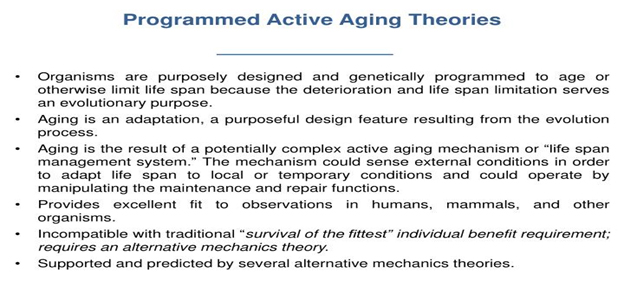
Aging is a biological program that proceeds lifelong in phases, from embryogenesis to a final phase whose actions kills everybody left. This is a very ancient program, manifest in the earliest living creatures, and evolutionarily conserved thereafter. Versions of this program operate in every living creature – plants, bacteria, worms, insects, fish, snakes, lizards, and all mammals including us humans. There is a species-determined version of the aging program and corresponding maximum lifespan for every living thing – 123 years for humans.
The final phase of aging turns deadly to kill every living thing off by the absolute age limit for the species – no exceptions. I go on here to characterize the central process of aging, its purpose, what it does, its stages, how it works, and what causes it. Then, I go on to describe a major hack on aging, one I think is good for average human life extension of 20% to 25%. Far more than the 5% to 12% known for various specific life-extending interventions, like taking rapamycin. I believe this hack can probably postpone the death-sentence action of the aging program by 20-30 years for us humans, and can likely allow most people to remain highly active, healthy, and functional until 100 or more. It is the hack that has been working for me personally. And I expect it to keep working until I’m 100 or so.
The science of aging is wicked complex, and here I can present only a central outline of what is supported by thousands of research studies, necessarily simplified though still accurate. I have already published an article in this agingsciences.com blog covering much of the same ground covered here, at www.anti-agingfirewalls.com/2023/04/04/healthy-active-and-productive-till-100-laying-out-the-adult-aging-process-a-breakthrough-and-my-personal-story. I have worked to make the presentation in this current blog entry more straightforward and easier to follow. As usual, it contains links to published science literature citations that back up my central assertions.
The Information Overload of Aging
Aging impacts or is impacted by every biological organ or system in very complex ways.
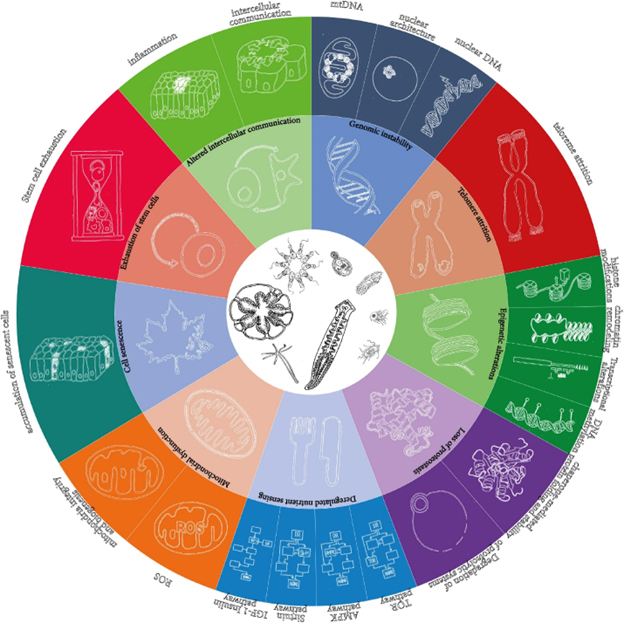
Indeed, everything in this diagram is closely associated with aging. You can start with any item and build an entire theory of aging around it. In fact, this has been done over the years, with a few of the resulting theories useful and some others, like telomer attrition, relativerely useless or plain wrong..Unfortunately, everything is a close cousin to nothing, and diagrams and explanations like this one that lay out the hallmarks of aging tell us nothing about what the basic and underlying processes of aging are, and what, if anything, can be done about them. So we need to take a different tack.
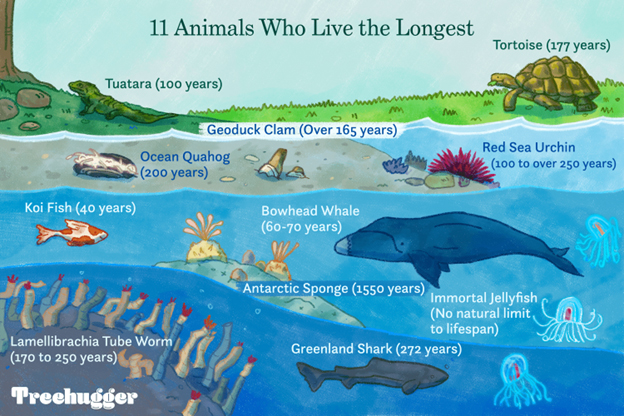
The aging program is very ancient and is “evolutionarily conserved,” which means it responds to a key biological necessity and versions of it are in every living thing. Evolution has passed this program on to new species as they evolved. In creating any new species, evolution usually passes on solutions found workable in the previous creatures, rather than inventing them anew. That is why we have variants of the same organs found in tiny field mice, whales, skunks, elephants and us. Species-specific variants of this aging program operate in essentially all known species, be they bacteria, insects, plants, fungi, or mammals. Every species has its own nominal “use by” expiration maximum lifespan.
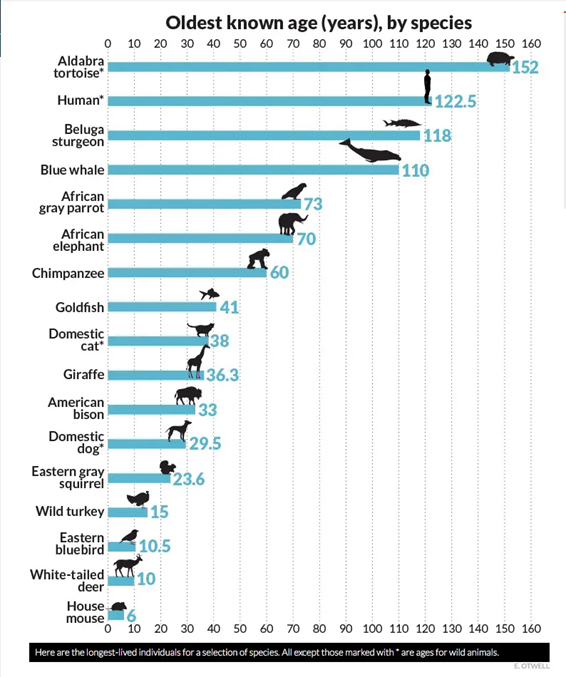
For humans, 123 years; for many mouse species, 20 months; for fruit flies, 10-20 days. The Mayfly has a lifespan of only 24 hours and completes its life cycle, including reproduction, within one day of its birth. Examples of Very Long-Lived Organisms:
• Glass Sponges – Found in deep oceans, some species may live up to 15,000 years, making them among the longest-lived animals
• Greenland Shark – Estimated lifespan of 400–500 years, the longest-lived vertebrate known.
• Ocean Quahog Clam (Arctica islandica) – Individuals have been recorded at over 500 years old.
• Bristlecone Pines – Trees in California’s White Mountains can live for 4,800+ years, with “Methuselah” being one of the oldest known non-clonal organisms.
The following tables are quite incomplete:
Evolution loves all living entities, and generally seeks to provide for the well-being and competitive survival of each. However, evolution loves living species even more. When individual survival and species survival are incompatible, evolution/nature favors species survival. That, I think, is why the final stage of aging is out to kill off every living entity by its species expiration date. That way, younger members of a species don’t have to compete for resources too long with ensconced older members, and even the most horrible and controlling of dictators pass away in time. Aging is how nature implements its drive to best ensure the survival of biological species. Species may survive millions of years, yet the lifespans of members of most species are less than our own.
Some current aging science researchers deny that adult aging is programmed. Despite mounting evidence to the contrary, they cling to the obsolete notion that aging results from the stochastic accumulation of random damage. Almost everyone agrees that the first stages of human aging (through early adulthood) are clearly the result of a complex, exquisitely programmed process. Human embryos and babies almost all end up as viable children and then adults. But the older viewpoint that adult aging is caused by accumulated random damage remains popular. If this were so, there would be no species-specific age limits as there are. There would be a tiny few of 200–500-year-old people and a few 100-year-old dogs. This is because random processes produce Poissonian time distributions, ones with indefinitely long tails. Some of these programmed aging deniers see their prescription for longevity Is something like “If something in your body is broke, fix it.” Great idea. However, that already is the approach of Modern Medicine. See the 2016 article Evolution of Aging Theories: Why Modern Programmed Aging Concepts Are Transforming Medical Research. Further, in this blog we are able to identify the central mechanism of the adult aging program, how it works, and even how to partially hack it.
Forget living forever in your present body. Absolutely everything about us as individuals is temporary. I believe we are now in an extremely important decade in the history of biology, however, in which we are now decoding many mysteries of life, learning how to reverse key aspects of aging, and learning how to expand lifespans of healthy individuals, possibly up to 110 years. In my research writings and presentations, I have referred to this process as “YOUNGING”. The second half of Part 2 of this current series is concerned with current Younging research: MECHANISMS OF AGING AND INTERVENTIONS FOR LONGEVITY PART 2: MORE ON THE FIRST 100 YEARS, AND AGES 100 – 123. You can also discover much more about Younging by searching the Internet for this term together with my name. Look for sound podcasts, YouTube videos, and written treatises.
A few other longevity scientists have also been working on YOUNGING interventions and have demonstrated how their interventions can make old rats younger in most important dimensions. YOUNGING, effective age reversal, has been proven possible! However, It is not known now how long such interventions can extend life for people older than 100. As pointed out in Part 2 of this series, in animals, a Younging intervention in an old rat may be capable of doubling the expected remaining lifespan for that rat subspecies. This may sound amazing, but in fact is not that impressive. According to the latest U.S. Social Security Administration actuarial life tables, a 102‑year‑old US human male has an average remaining life expectancy of about 2.1 years. So doubling that is only to 4.2 years, relevant but not extraordinary. My current conjecture is that it may be extremely difficult, and perhaps even practically impossible, to extend someone’s life beyond the 123-year age limit.
For people like me who would like to live much longer than that, however, a new possibility has opened up in the last 5 years, a possibility currently not feasible but that could well be feasible in less than 10 more years. That is to transfer a strong surrogate of oneself into an advanced AI entity, specifically a Humanoid Robot which could continue to pursue life like a human does. I examine this possibility in Part 2 of this Series
ABOUT THE AGING PROGRAM
Aging impacts all levels of every organism known: biochemical, sub-cellular (including mitochondria), cellular, organ, major system, and whole organism. Most of the science literature on aging has focused on particular impacts, the “Hallmarks of Aging,” at particular levels, leaving confusion as to what is secondary vs. what is basic and causal. The fundamental cause of aging is much simpler.
Aging is a distinct, effective biological program that proceeds in phases, including the program of initial and early development, starting with an egg and a sperm. The essential features of this aging program have become clear to me in the last couple of years.
This program is out to grow us up successfully until we are 25, + or – a few years, depending on the features of the individual. It is working for the good of the species, not the individual. Lifelong, the aging program strives to prevent serious infectious diseases and other deadly pathologies, until its final stages, when it is out to encourage them. In its final phases, when we get to 80 and beyond, the program is increasingly out to kill everybody.
Throughout most of our lives, the aging program works to keep us healthy. However, if the program can’t manage to do that, it can quickly change its strategy to having your own immune system kill you instead. It does this by loosening a deadly inflammatory cytokine storm. This is to keep people whose condition is too weak to fight off a pathogen from passing that pathogen on to others, accelerating its propagation. It is an example of how evolutionary processes favor the survival of a species over that of an individual when these two objectives conflict. This program is very ancient and versions of it exist in all living species including plants, birds, bees, cows, worms, insects, dolphins, and mushrooms. It is just as efficient and effective as the early development program is. Everybody dies before reaching 124.
But, being a program, aging can be hacked to a limited extent once one knows exactly how it works. I know of one easy main hack that I think can buy us, humans, 20-30 or more years of additional healthy, active lifespan. The hack works by slowing the aging program way down. It is available to everybody right now and inexpensive. I know. I am 96, and what I am proposing here has provided me with the wherewithal to lead a full active family and social life, conduct deep research in biomedical literature, attend to Synergy Bioherbals LLC, and generate and publish this blog.
The aging program typically proceeds in stages. The early stages are focused on initial growth and development starting with conception. The finial stage is plain out to kill you one way or the other.
THE STAGES OF THE AGING PROGRAM
Let’s look at how aging typically plays out at various stages in the life of a healthy disease-free person in a modern industrialized society, namely at conception and at ages 1, 25, 45, 68, and 85.
Conception
Early development, including embryogenesis, is the first stage of aging and is probably the most complex and remarkable natural process known in all of science. Starting with an ovum and a sperm, the program progresses to creating a human body comprising some 37 trillion cells of 200 types, organized to support the complexity of organs and body systems we all have. It is a precisely articulated process involving many stages which have been extensively studied. The fine details of it would fill libraries.
All cells in the human body have the same genes. The differences between the some 200 cell types we have are epigenetic, a function of which genes are turned on (expressed; that is, actively make the protein corresponding to that gene) and which are turned off in any particular place in the human body at any given time. This first year of human development is an exquisitely choreographed and very reliable process involving multiple steps of turning dozens, hundreds, and thousands of developmental and other genes on and off in an extremely complex and highly specific manner.
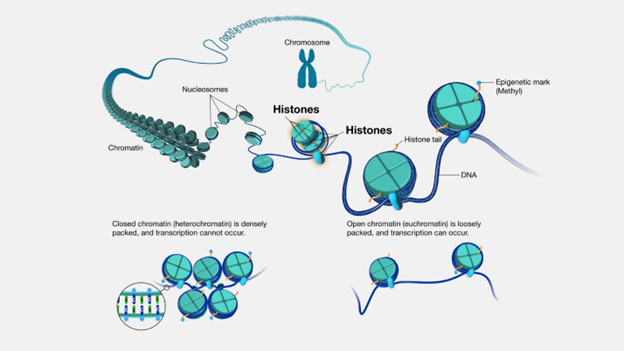
How does the developing embryo go about turning a closely related family of genes off and on together to achieve a development step, say, growth and development genes? A big part of the answer is via post-translational modifications of histones, especially methylation/demethylation. Histone methylation/demethylation is a major mechanism used by the body during early development to turn large and small gene families on and off together. That is, attaching or detaching methyl chemical groups to histones, the “spools” around which DNA is wrapped. For most of the histones, genes in a highly methylated histone spindle are turned off, and cannot be expressed. Demethylating the histone allows the genes to be turned on. For some histones, the opposite is so. Many of the genes in our chromosomes are carefully sequenced so this simultaneous turning on and off of highly related genes can happen. Strictly speaking, histone methylation by itself can turn genes off, but promoter site activation is also required to turn them on. Think of histone methylation as a master lock, for example, turning all genes associated with histone H3K27 off when double or triple methylation is present. When methylation is absent, those genes can be turned on individually by promoter activation.
Each human cell contains about 30 million nucleosomes, and there an octamere of 8 histones per nucleosome. A given histone, like H3K27, is therefore repeated thousands of times on each chromosome – meaning that thousands or tens of thousands of genes can be turned off or potentially on by methylating/demethylating that histone.
DNA, cellular and other forms of biological damage can and do occur from the earliest moments of life, long before birth and throughout the entire trajectory of a lifetime. These include DNA breaks, misfolded proteins, runaway transposons, aneuploidy, and damaged genes. Such damage is largely unavoidable, inherent in the processes of cell reproduction and life itself; some of it results from environmental toxins or radiation. Fortunately, evolution has endowed our bodies with exquisite mechanisms for detecting and repairing serious damage. Examples are the mechanisms for repairing single-strand (ref) and double-strand DNA breaks (ref). These maintenance, renewal, and repair mechanisms tend to work very well early in life, but become less and less effective as adult aging progresses.
Histone methylation/demethylation plays a central role in DNA repair, although the actual process is incredibly complex. (For a deep dive into this topic you could study the 2021 article The Role of Histone Lysine Methylation in the Response of Mammalian Cells to Ionizing Radiation. Look at the diagrams. As you can see, multiple histones and multiple histone methylases/demethylases are involved.) I will continue to focus here on the histone H2k27 and on its demethylases JDJM3 and UTX. I have also not discussed other post-translational histone modifications here, such as acetylation. This discussion, while far from the complete picture, is accurate and sufficient to explain the basics of aging, what it consists of and how it happens.
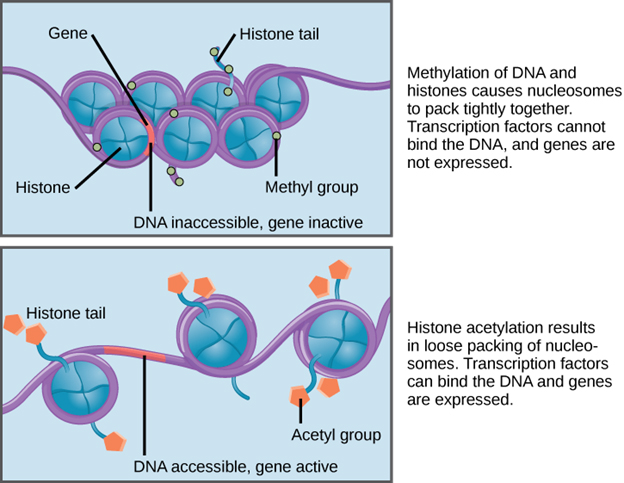
As it happens, many maintenance, repair, and renewal genes are associated with the histone H3K27. Included, for example, are the genes for stem-cell differentiation necessary for organ renewal. In the earliest stages of life, the demethylases JDJM3 and UTX are very active at this position, and such genes are usually active. To telegraph where I am going here, the same basic mechanisms of histone methylation and demethylation for turning off or turning on hundreds or thousands of genes at once are used in all stages of the aging program throughout life. There is also a complex end-of-life phase of the aging program that kills everyone by age 123, and that phase also uses histone methylation to turn groups of genes on and off.
An additional level of body flexibility as well as intellectual complexity is added by the fact that H3K27me3 along with H3K4me3 are part of a bivalent domain, which means the body can easily and quickly switch between inactivating histone-associated genes-( H3K27me3) and activating them (H3K4me3).
AGE 1
The initial Developmental Phase of the program has been at it for 21 months, during the pregnancy period and for a year after birth. It has accomplished much, but still has a very long way to go. Again, our bodies are the most complex structures in the universe, and this developmental process is probably the most complex natural process known. Continuing with a simplified but correct description of what is most relevant here: during the early phases of development, there continues to be a high degree of organ-specific expression of JDJM3 and UTX, the demethylases that keep double and triple methylation from happening during development at histone position H3k27. This is necessary to allow full expression of large numbers of growth and development genes as well as maintenance and repair genes. There are also times and places during early development when these demethylases are turned off. At age1 there is still a lot of growth and development to be done. the specific importances of JDJM3 and UTX became available some 20 years ago. See the 2007 publication Identification of JmjC domain-containing UTX and JMJD3 as histone H3 lysine 27 demethylases. “Covalent modifications of histones, such as acetylation and methylation, play important roles in the regulation of gene expression. Histone lysine methylation has been implicated in both gene activation and repression, depending on the specific lysine (K) residue that becomes methylated and the state of methylation (mono-, di-, or trimethylation). Methylation on K4, K9, and K36 of histone H3 has been shown to be reversible and can be removed by site-specific demethylases. However, the enzymes that antagonize methylation on K27 of histone H3 (H3K27), an epigenetic mark important for embryonic stem cell maintenance, Polycomb-mediated gene silencing, and X chromosome inactivation have been elusive. Here we show the JmjC domain-containing protein UTX (ubiquitously transcribed tetratricopeptide repeat, X chromosome), as well as the related JMJD3 (jumonji domain containing 3), specifically removes methyl marks on H3K27 in vitro. Further, the demethylase activity of UTX requires a catalytically active JmjC domain. Finally, overexpression of UTX and JMJD3 leads to reduced di- and trimethylation on H3K27 in cells, suggesting that UTX and JMJD3 may function as H3K27 demethylases in vivo. The identification of UTX and JMJD3 as H3K27-specific demethylases provides direct evidence to indicate that similar to methylation on K4, K9, and K36 of histone H3, methylation on H3K27 is also reversible and can be dynamically regulated by site-specific histone methyltransferases and demethylases.”
AGE 25(+/- 3- 5 years depending on the individual.)
This is the typical age when the Development phases of the Aging Program give way to the Adult Aging phases in humans. This transition can be noticed in many species, including plants. In some species, it can occur very rapidly, within a few hours. In many species, it occurs just after the initial phase of offspring-bearing. The transition involves lowering of expression of JDJM3 and UTX, the demethylases that keeps double and triple methylation from happening during development at histone position H3k27.
In 2014 Morimoto wrote in Proteostasis and longevity: when does aging really begin? “Here, we propose, from studies in Caenorhabditis elegans, that proteostasis collapse is not gradual but rather a sudden and early life event that triggers proteome mismanagement, thereby affecting a multitude of downstream processes. Furthermore, we propose that this phenomenon is not stochastic but is instead a programmed re-modeling of the proteostasis network that may be conserved in other species. As such, we postulate that changes in the proteostasis network may be one of the earliest events dictating healthy aging in metazoans.” In 2020 Morimoto further wrote in Cell-Nonautonomous Regulation of Proteostasis in Aging and Disease: “Additionally, in metazoans, proteome stability and the functional health of proteins is optimized for development and yet declines throughout aging, accelerating the risk for misfolding, aggregation, and cellular dysfunction. Here, I describe the cell-nonautonomous regulation of organismal PN by tissue communication and cell stress-response pathways. These systems are robust from development through reproductive maturity and are genetically programmed to decline abruptly in early adulthood by repression of the heat shock response and other cell-protective stress responses, thus compromising the ability of cells and tissues to properly buffer against the cumulative stress of protein damage during aging.” At the time of transition, the Polychrome Repressive Complex (PRC) starts its adult job of inducing double and triple methylation at H3k27me2-3, slowly at first. This and methylation changes at other histone positions have a net impact of starting to down-regulate numerous repair, maintenance, and renewal genes. Yet at this age, the expression of these genes is still near maximal. There is little to no tissue damage or consequent inflammation. As we know, many people at this age are very healthy and think and often behave as if that situation will go on forever. Diseases are generally rare and tend to resolve quickly.
Several aspects of human development seem to be affected by this transition One thing is discussed in the 2017 publication Human behavioral complexity peaks at age 25. “Our main finding is that the developmental curve of the estimated algorithmic complexity of responses is similar to what may be expected of a measure of higher cognitive abilities, with a performance peak around 25 and a decline starting around 60.”
This phenomenon, involving histone modifications that mark the transition from growth and development, applies to most forms of life, including plants. For example, see Cell-type-dependent histone demethylase specificity promotes meiotic chromosome condensation in Arabidopsis
AGE 45.
The PRC has been doing its methylation job for 20 years now, and many key repair, renewal and maintenance genes associated with H3K27 are significantly downregulated. With the downregulation of these genes and the tasks they perform, some tissues begin to be distressed, become inflamed, and start emitting inflammatory cytokines like TNF-alpha, IL-1, IL-6, and IL-22. Systematic inflammation is more manifest. Diseases and sicknesses and signs of aging of all kinds are becoming more common and of concern, including arthritis, bronchitis, pneumonia, near-sightedness, obesity, asthma, diabetes, genitourinary disorders, hypertension, mental disorders, and strokes.
Yet, despite partial methylation, body repair, maintenance, and renewal genes are still generally active enough to support largely good functioning. Medications and a healthy lifestyle may help postpone the serious consequences of the disease. Hallmarks of aging are evident, and the person looks like a 45-year-old, no longer like he/she looked at 25.
YES, AGING IS NOT DUE TO ACCUMULATION IF RANDOM DAMAGE. IT IS DUE TO PROGRESSIVE DOWNGRADING OF NATURAL DAMAGE REPAIR AND RENEWAL PROCESSES ASSOCIATED WITH PROGRESSIVE DOWN-REGULATION OF KEY MAINTENANCE AND RENEWAL GENES, VIA IN PART METHYLATION OF KEY HISTONES.
AGE 68.
The Adult Aging Program has been at work for some 43 years now. DNA histone methylation is now such that the genes involved in body repair, maintenance, and renewal are functioning at a fraction of their original levels. They are too methylated. And some developmental genes that produce unwanted actions for aging adults are being progressively turned back on. Multiple tissue types and organs are experiencing increasing distress, and are emitting copious levels of inflammatory cytokines, which persist in the bloodstream. These cytokines increase methylation levels of protective genes even further, in a positive feedback loop. The body as a whole is entering a hyperinflammatory state. And incidences of the inflammatory diseases that kill old people are becoming frequent: cancers of all types, retinopathy, inflammatory lung diseases, dementias, coronary artery and valve diseases, auto-immune diseases like arthritis, lupus, and scleroderma, gout, etc.; the “usual suspects” for killing old people. Several such diseases can occur at the same time. People at this age are more prone to catching infectious diseases like SARS or COVIDs, and use of the health care system is typically accelerating. Heart attacks and strokes are becoming common. Many friends in the same age cohort are moving into Assisted Living; some are going into nursing homes. Emergency Room visits are becoming more commonplace. Some family members and dear friends are starting to die.
AGE 85.
The situation described for age 68 has become much more dire in every respect. Histone and DNA methylation are at levels where many repair, maintenance, and renewal genes are close to being completely silenced. DNA methylation and circulatory inflammatory cytokine levels seem hopelessly abnormal. A positive feedback loop of whole-body hyperinflammation leading to ever more unwanted DNA histone methylation has taken over. Tissue and organ damage are extensive, and the diseases of old age are rampant and doing their pre-killer and killer jobs. Far fewer than 30% of the population reach this age. And if you do manage to live that long, your general outlook is not good. From this age onward, you are likely to experience increasing frailty and multiple emergency room visits and hospitalizations. You might pass the final months or years of your life in a nursing home with dementia, a semi-functioning heart, and an incurable cancer. Aging can (and does) kill you in thousands of different ways. Organ and system failures and diseases are among the most common. There are more than 100 types of cancer that can affect almost every part of the body. 100% of the time. “All the King’s Horses and All the King’s Men,” of medicine and health care can’t rescue you from the final Death Phase of the Adult Aging Program. A version of the Adult Aging Program works for every advanced species we know of. Everything alive dies, no exceptions.
Let me contrast my personal situation at 96 with the grim scenario for 85 year olds listed above. I have none of the known degenerative diseases of advanced aging. I haven’t seen a real doctor for 10 months. I can climb stairs, cook up pasta Bolognese for the whole family, vacuum key areas of the house, do the laundry and wash a sink-full of dishes and load the dishwasher every night. And get in 6-12 hours of longevity research, communications with colleagues and writing every day. Unlike some of my close colleagues, I only monitor a tiny collection of health and aging biomarkers. For the same reason most people in their 30s and 40’s don’t bother with their biomarkers – they don’t have to.
I do not claim to have defeated aging. But there is both scientific and personal evidence that it can drastically be slowed down. And some small-animal evidence from researchers like the Conboys and Harold Katcher.
HACKING THE AGING PROGRAM
Being a program that we can understand, aging is at least partially amenable to hacking. I believe I have just described the central causal chain of events involved in human aging. And those events allow us to identify with confidence how to slow advanced aging. The aging program can be hacked by blocking the hyperinflammation part of the positive feedback loop in the final phase. I have been pursuing various approaches to controlling inflammation for over 30 years now, and you can read some key blog posts I have written on the science of inflammation
My primary intervention for blocking systemic inflammation in the last ten years has been regularly taking 4 Herb Synergy (4HS) – a nano-preparation of certain herbal anti-inflammatory dietary supplements. As below, I also do a lot of other things to lower systemic inflammation. I am sure some of these are important, but I don’t know how important. What I can say is that if I discontinue taking 4HS, in 3-4 weeks I start getting distressing inflammatory symptoms which get worse and worse. Resuming 4HS, these symptoms vanish in a week or so. Discontinuing other anti-inflammatory supplements or activities for up to 1-2 months while still staying on 4HS, I have not noticed any strong negative effects.
In Part 2, I will update the above, describing additional approaches to slowing aging, such as taking Alpha Keto Glutarate supplements, a substance which demethylates HK27me2-3 and related histones, slowing the aging process I have described.
Other researcher Findings
A few other researchers have suggested additional strategies, all of which have the impact of blocking chronic inflammation. Irina and Michael Conboy, prominent aging researchers, have suggested periodic purifying of circulating blood from the pro-inflammatory cytokines using an apheresis machine(ref). Apheresis involves the removal of blood plasma from the body by the withdrawal of blood, its separation into plasma and cells, purification of the plasma, and the reintroduction of the cells and purified plasma into the body. Their small-animal experiments suggest that that process also works for the reduction of circulating inflammatory cytokines. Their aged small animals, by multiple measures, get younger . While it works, apheresis is not practical for most people. because it is expensive, invasive, requires technical expertise and the use of a special machine. Further, for apheresis it to be effective in keeping the bloodstream free of inflammatory cytokines, the process must be repeated every 3 weeks or so.
Approaches to YOUNGING used by other researchers include injections of exosomes derived from young pig blood plasma (ref: Reversal of Biological Age in Multiple Rat Organs by Young Porcine Plasma Fraction), and treatment with GDF11, often a strongly anti-inflammatory blood factor(ref)(ref). I will not discuss these further here, since they cannot be practically pursued by ordinary people. What is important is that several research groups are pursuing multiple purportedly positive approaches to longevity. A few of these have demonstrated mild longevity impacts on small animals. Other than what is being reported here, there has been little to no recent empirical research related to human longevity. For some time, it has been known that mild human longevity increases have been shown to result from calorie restriction regimens, taking rapamycin, and taking metformin.
Other strategies I have been using to combat systemic inflammation
I list the most important of the additional anti-inflammatory strategies I have been pursuing here. I have discussed each of these in detail in articles in my longevity blog, agingsciences.com.
- Taking additional anti-inflammatory supplements in pill/capsule form, such as NRF2 activators like gingko biloba, milk thistle extract, saw palmetto, and bacopa, (ref)(ref)(ref)
- Taking a quality fish oil supplement, one that is high in DHA and EPA. These oils contain key substances important for the resolution phase of acute inflammation to occur, the normally final stage where the inflammation vanishes. The substances are called resolvins, protectins, maresins and lipoxins(ref),
- Taking supplements like nicotinamide riboside to upgrade the expression of the NAD+ metabolic factor, upregulating a number of protective genes(ref),
- Taking supplements intended to improve mitochondrial electron transfer chain functioning (ref)
- Synchronizing to critical brainwave frequency Via Pulsed Electromagnetic Frequency (PEMF) devices, which helps me concentrate better during the days and sleep better at night(ref),
- Photobiomodulation, including selective partial body irradiation with critical infrared frequencies(ref),
- Pursuit of a number of simple daily hormesis techniques, Including deliberate exposure to whole-body heat conditions (EG, sauna) and cold exposures, to upregulate expression of heat shock and cold shock proteins(ref),
- Exercising while breathing oxygen, a process known as EWOT(ref),
- Living and interacting constantly with significantly younger wives and family members(ref), and
- Getting ample solid REM and Deep sleep on a regular schedule(ref).
These are all interventions that I have researched and know are powerfully anti-inflammatory.
Acute vs Chronic Inflammation
The inflammatory process is an essential first-line immunologic defense system evolved in advanced organisms to confer protection required for survival of individuals. Short-term acute inflammation is part of wound healing and acts against harmful agents, such as pathogens, toxins, or allergens. Familiar manifestations of it are the itchy red bumps of mosquito bites, fever when you have the flu, and redness and swelling associated with burns. Less familiar ones can include muscle weakness, diarrhea, nausea, joint pain, and skin rashes. Normal inflammation involves a number of distinct phases, including a final resolution phase.
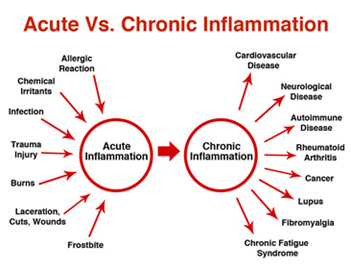 Image source “Under normal conditions, the tightly coordinated actions of various defense components including immune cells, endogenous anti-inflammatory agents, and tissue remodeling processes enable the resolution of acute inflammation by facilitating the elimination of pathogens, infected cells, and repair to damaged tissues to restore body homeostasis [1]. However, when this intricate acute inflammatory response fails to resolve and instead persists, more defense components are mobilized to create a long-term unresolved immune response known as chronic inflammation. Chronic inflammation, which typically manifests itself in a low-grade manner for a prolonged period, involves macrophage- and lymphocyte-accumulated leukocytes [2], and various other cellular components. It is important to recognize that this chronic inflammation is causally associated with changes in the cellular redox state and cell death signaling pathways.” So, Chronic inflammation is inflammation that does not resolve.
In this discussion of longevity, by “systemic inflammation,” I am referring to chronic whole-body inflammation. This discussion highlights how systemic inflammation is both a cause of and a consequence of epigenetic aging. Some drugs (like prednisone) tend to block both types of inflammation. They can be used only for short periods because acute inflammation is an important tool of natural body protection. 4HS blocks chronic inflammation while still allowing acute inflammation. As a long-term user of 4HS, I have an intact and strong wound healing capability, meaning I can respond with acute inflammation when needed, while controlling my systemic inflammation.
ANSWER TO A KEY QUESTION
The new perspective of this article answers a central question I have been asking myself for years. That is: Which of the longevity interventions that I have been pursuing in recent years have been efficacious in allowing me to be essentially disease free, cognitively sharp and still highly productive as I grow older, now age 96? Which one or ones are central? The answer is the interventions that combat systemic inflammation, in my case the main approach having been regular taking of 4 Herb Synergy during the last seven years, and for the twenty years before that, taking the 4HS herbal anti-inflammatory components. And this was done with a different intent than longevity in mind.
View the full article at Anti-Aging Firewalls