






Beijing, China — In response to the growing healthcare demands of a rapidly ageing population, China has launched its first national competency-based education programme in longevity medicine, marking a significant step toward integrating healthy longevity and preventive care into mainstream clinical practice. The initiative was jointly developed by the China Non-public Medical Institutions Association and the Asia-Pacific Longevity Medicine Society (APLMS).
The newly introduced Standardized Training Curriculum for Physicians in Longevity Medicine establishes a structured educational framework for this emerging interdisciplinary field. The programme aims to cultivate a new generation of physicians capable of addressing ageing-related health challenges through evidence-based, preventive, and patient-centred approaches aligned with the national Healthy China 2030 strategy.
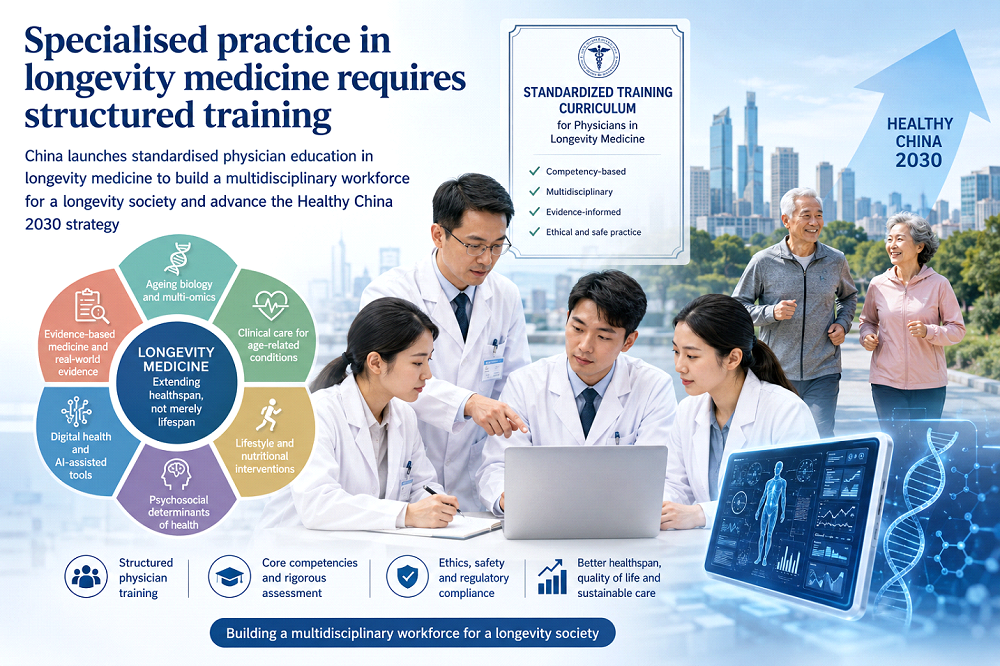
Unlike traditional disease-focused healthcare models, longevity medicine emphasises extending healthspan — the years lived in good health — rather than merely increasing lifespan. The curriculum integrates ageing biology, management of age-related multimorbidity, nutrition and exercise interventions, traditional Chinese medicine, psychosocial health, digital medicine, AI-assisted clinical decision-making, and real-world evidence into physician training.
The programme is designed for licensed physicians in internal medicine, general practice, geriatrics, cardiology, endocrinology, rehabilitation, and related specialties. Participants complete structured coursework, case-based learning, supervised clinical practice, and competency assessments before receiving certification in longevity medicine.
According to Dr Tim Shi, President of the Asia-Pacific Longevity Medicine Society (APLMS) and programme lead, longevity medicine represents a new clinical paradigm grounded in gerscience, comprehensive chronic disease management, and early risk prediction.
“As populations age globally, healthcare systems must transition from reactive disease treatment toward proactive healthspan management,” said Dr Shi. “This initiative is designed to help physicians identify opportunities for earlier intervention, preserve functional capacity, and improve quality of life throughout the ageing process.”
The curriculum also places strong emphasis on medical ethics, regulatory compliance, risk communication, and evidence-based practice. Given the rapid expansion of geroscience-guided therapeutics, nutritional supplementation, regenerative medicine, and digital health technologies, the programme highlights the importance of scientific rigour, patient safety, and responsible clinical implementation.
Key areas of training include:
- Ageing biology and biomarkers
- AI-assisted clinical decision support
- Biological age assessment and digital monitoring
- Cardiometabolic disease prevention
- Cognitive health and brain ageing
- Osteoporosis and sarcopenia management
- Personalised lifestyle and nutritional interventions
- Traditional Chinese medicine and wellbeing
- Real-world evidence and N-of-1 clinical methodologies
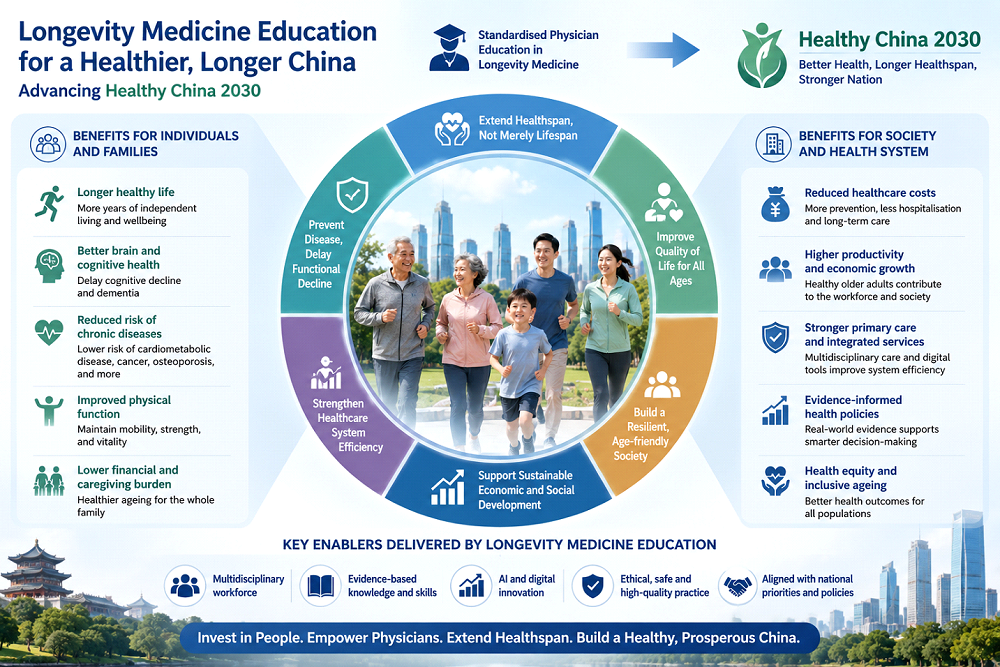
The initiative is regarded as one of the earliest national-level efforts to build system-wide capacity in longevity medicine within a rapidly ageing middle-income country. Organisers believe the programme could serve as a reference model for other healthcare systems seeking scalable strategies to promote healthy ageing, reduce long-term healthcare burdens, and strengthen preventive healthcare delivery.
As China moves toward becoming a longevity society, the programme reflects a broader transformation in healthcare priorities — from treating disease after onset to maintaining health, resilience, and functional wellbeing across the lifespan.
View the article at lifespan.io


