stopgam's thread
Julia36
20 Jan 2015
QUANTUM ARCHAEOLOGY.
How Science is trying to resurrect the dead.
Micro Map of the past being created.
- Quantum computers and new maths to calculate detailed histories and memories of everyone dead.
- Face and body reconstructions a million years old already achieved: mind reconstructions coming.
- 106 billion people to be resurrected within 40 years.
MAIN ARTICLE:~~>(working: Nine pages)
QuantumArchaeology
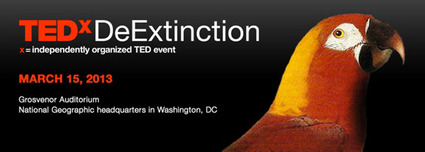
TEDxDeExctinction talks website »
<--- MORE INFORMATION BACK THRU THIS THREAD<------
A.I. YALE "A.I. is not about perfectly replicating a human, it's about figuring out the principles that allow agents to act intelligently and improving upon those."
This is one way!
Reconstructing Homoerrectus inter alia. The models we make of the ancient past are crude, but computers and A.I. are coming at accelerations not comprehend able.
Edited by stopgam, 20 January 2015 - 06:40 AM.
Julia36
20 Jan 2015

A.I. Boffins warn of dangers.
Add yours?
http://futureoflife....ter#signatories
"Research Priorities for Robust and Beneficial Artificial Intelligence: an Open Letter Artificial intelligence (AI) research has explored a variety of problems and approaches since its inception, but for the last 20 years or so has been focused on the problems surrounding the construction of intelligent agents - systems that perceive and act in some environment. In this context, "intelligence" is related to statistical and economic notions of rationality - colloquially, the ability to make good decisions, plans, or inferences. The adoption of probabilistic and decision-theoretic representations and statistical learning methods has led to a large degree of integration and cross-fertilization among AI, machine learning, statistics, control theory, neuroscience, and other fields. The establishment of shared theoretical frameworks, combined with the availability of data and processing power, has yielded remarkable successes in various component tasks such as speech recognition, image classification, autonomous vehicles, machine translation, legged locomotion, and question-answering systems. As capabilities in these areas and others cross the threshold from laboratory research to economically valuable technologies, a virtuous cycle takes hold whereby even small improvements in performance are worth large sums of money, prompting greater investments in research. There is now a broad consensus that AI research is progressing steadily, and that its impact on society is likely to increase. The potential benefits are huge, since everything that civilization has to offer is a product of human intelligence; we cannot predict what we might achieve when this intelligence is magnified by the tools AI may provide, but the eradication of disease and poverty are not unfathomable. Because of the great potential of AI, it is important to research how to reap its benefits while avoiding potential pitfalls. The progress in AI research makes it timely to focus research not only on making AI more capable, but also on maximizing the societal benefit of AI. Such considerations motivated the AAAI 2008-09 Presidential Panel on Long-Term AI Futures and other projects on AI impacts, and constitute a significant expansion of the field of AI itself, which up to now has focused largely on techniques that are neutral with respect to purpose. We recommend expanded research aimed at ensuring that increasingly capable AI systems are robust and beneficial: our AI systems must do what we want them to do. The attached research priorities document gives many examples of such research directions that can help maximize the societal benefit of AI. This research is by necessity interdisciplinary, because it involves both society and AI. It ranges from economics, law and philosophy to computer security, formal methods and, of course, various branches of AI itself. In summary, we believe that research on how to make AI systems robust and beneficial is both important and timely, and that there are concrete research directions that can be pursued today."

It wont have escaped your attention that
whoever builds Superintelligence controls the rest of us.
Edited by stopgam, 20 January 2015 - 07:06 AM.
Julia36
20 Jan 2015
colorful British History (even more color when the QA Grid gets built!)
Story telling and histories are early grids.
http://www.history.c...tory/robin-hood
How to get serious in history!

Edited by stopgam, 20 January 2015 - 06:13 PM.
Julia36
21 Jan 2015

Forensics... Figuring out the past
I used to play a party game: go round the table telling people detailed information about themselves and saying what illnesses they were prone to. They often thought I'd been briefed, but it is observation and building up reference data bases anyone can do. I was inspired by Sherlock Holmes of course, and deducing WHY I 'felt' a certain fact was so.
we observe more than we think. Insight isn't mystical but it is fast, and you can train to work back from instictive conclusion to cues in the environment and your own memories to see it is reasonable.
Coming hypercomputing systems will deduce from seemingly unconnected facts, and astonishingly fewer of them.
The secret is cross-referencing for eliminations with probability weightings assigned. Linear reasoning is ejected in favor of myriad simultaneous equations where you are solving for many unknowns far back into history.
The greater your powers of deductions, the less artefacts you need.
The larger the general data bases, the less on the scene facts you need to compute from.
My contribution to forensics is formalising the law that
there is a proportional relationship between:
artefacts = computing power
More of one you have the less of the other you need, subject to a minimum umber of starting positions, and access to information banks.
Great article by the Independent's chief science officer:
The Chinese military general and philosopher Sun Tzu once famously solved a murder in a village by asking all its residents to bring out their sickles and leave them in the sun. Eventually, flies settled on one particular sickle and the murder weapon, and the murderer, were identified.
This early example of forensic science, which goes back 2,500 years, illustrates perhaps the single most important function of forensics – to find the scientific evidence that links a suspect to a crime. Identifying the murder weapon is just one part of the process." more>>>
"
http://www.independe...me-9991369.html
Edited by stopgam, 21 January 2015 - 01:04 AM.
Julia36
21 Jan 2015
Police (& other) fingerprinting is still in it's infancy. Finger prints have tons more to reveal than just whose they are. Pressure can tell you how fast the person was moving, what they ate, what many of their daily habits are, what kind of place they live in, and what medical conditions they may have. How old they are, what they look like, and what direction they were moving in (& tons more like if the subject was sweating, and sometimes where he was going next (that might sound like magic to some!).
Robots are usually better at examining and detecting/ handling finger prints to avoid contamination and blunders.
What is called "experience" in crime detection can be stripped and turned into computerized expert systems, which are mixes of algorithmic facts and methods, all pooled and usefully international, and historical. It will be impossible for any crime to remain unsolved as QA advances, and this is already a trend as methods develop.
But finger prints are the tip of the iceberg of forensics. A massive and growing tool box awaits the novice. If criminals knew what tools crime detectors had they would never plead innocent!

Edited by stopgam, 21 January 2015 - 01:41 AM.
Julia36
21 Jan 2015
Detecting or Archaeology or Diagnosing or sketching the past - deducing, inducing aducing from little known information is made possible by METHODS and also growing data bases.
The Quantum Archaeology Grid (see page header) seeks to synthesize all data bases. there are millions.
eg In March 2014 The US government's open data project already offered more than 120,000 publicly available data sets.
The data is split up into specialist topics, but gathering and synthesising them is possible with advancing A.I. (I've pushed the British Library to digitalize it's entire collection of zillions of books using robots - now drones, which is tons quicker than humans can do and easier on the books and other information packs!
withheld
Vaults for books
No one knows how much information exists and 90% is said to have been created in the last 2 years.
But the amazing thing is we dont need it all. A minimum amount will do to deduce all possible information from it using rules and the laws of physics.
It is possible to text someone and warn them not to commit a crime a week ahead or it.
Police do this already by their knowledge of career criminals if an opportunity is likely to present itself eg a town carnival, but with accurate forensics amazing probabilities can be achieved, with predictions decades ahead.
Asimov explored this in Foundation where Hari Seldon makes accurate predictions 10,000 year intervals using psychohistory, which was the inspiration for Quantum Archaeology.

http://www.depauw.ed...imovpanel71.htm
Just to convince you I'm completely nuts I spent years in a newspapers Library perfecting retrodiction maths and trying to apply it to predictions (much harder- if possible).
That decade of work could be done with computers is 2 hours now!

Edited by stopgam, 21 January 2015 - 02:13 AM.
Julia36
21 Jan 2015

"In work published today in Nature Genetics, researchers at Cold Spring Harbor Laboratory (CSHL) have developed a new computational method to identify which letters in the human genome are functionally important. Their computer program, called fitCons, harnesses the power of evolution, comparing changes in DNA letters across not just related species, but also between multiple individuals in a single species. The results provide a surprising picture of just how little of our genome has been "conserved" by Nature not only across species over eons of time, but also over the more recent time period during which humans differentiated" more>>
http://phys.org/news...olutionary.html
* I'm in a minority here: DNA has no junk. Everything has evolved for use. Nature is ruthless efficient at discarding what's irrelevant. eg a mutation that deleted so-called junk DNA would have a survival advantage.

Edited by stopgam, 21 January 2015 - 02:30 AM.
Julia36
21 Jan 2015
"The contents of hundreds of papyrus scrolls that were turned into charcoal in the eruption of Italy's Mount Vesuvius in 79 AD - one of the great natural disasters of antiquity - have long remained a mystery. That soon may change.
Scientists said on Tuesday a sophisticated form of X-ray technology has enabled them to decipher some of the writing in the charred scrolls from a library once housed in a sumptuous villa in ancient Herculaneum, a city that overlooked the Bay of Naples.
The library was part of what's called the Villa of the Papyri," more>>
http://in.reuters.co...N0KT2IW20150120

Edited by stopgam, 21 January 2015 - 02:48 AM.
Julia36
21 Jan 2015


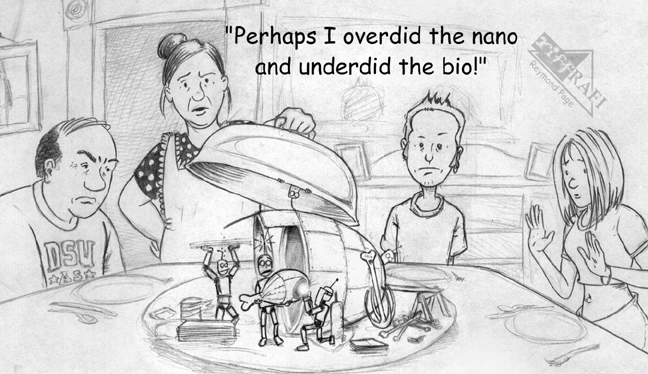
Nanobots successfully deliver their cargo inside a living animal for the first time
Major breaththru

Advancements in nanotechnology are finally starting to pay off as proved by a recent experiment which involved feeding nanobots to a living mouse. Though all of this may sound a bit like science-fiction, similar experiments have been performed before, albeit they have been limited to lab samples. The mouse in question is the very first living animal to hold nanobots inside it so this is definitely a major breakthrough. The said micro-machines are not as advanced as one might imagine, but they are still pretty impressive nevertheless.
Put simply, the microscopic devices are just zinc-coated polymer tubes containing a cargo that was meant to reach the stomach of the mouse. Sure enough, the 20 micrometer-long nanobots were fed to the animal and immediately began to react once they made contact with the acid found in its stomach. More specifically, the zinc coating reacted to the acid by producing hydrogen bubbles, which essentially propelled the tiny devices towards the stomach’s lining where they were supposed to arrive. Once there, the nanobots dissolved and the particles found within were released into the stomach tissue. In other words, mission successful." more>>
http://www.geeksnack...mal-first-time/

Fossils suggest dinosaurs lived in families 
"
Many reptiles, such as lizards and turtles abandon their eggs after laying.
In fact, only five per cent of mammals feed and protect their young after giving birth.
But, in a new study, paleontologists have found evidence that dinosaurs may have bucked this lizard trend.
Fossils reveal that a particular group known as Philydrosauras were caring parents - and it could be the oldest record of such care ever found.
The researchers from the University of Lincoln, along with colleagues from China and Japan, studied fossilised remains of the small semi-aquatic dinosaurs that live around 160 million years ago during the Jurassic Period." more>>

http://www.dailymail...l#ixzz3PQB9yopo

Edited by stopgam, 21 January 2015 - 03:13 AM.
Julia36
21 Jan 2015
ATLAS UNBOUND
2015 is the Year of the Robots as firms scramble to get to market.
Robots are being built to run faster than any land animal with instant access to over 130 data sets, out-thinking any man or group of men in scenario-prediction.
he DARPA Robotics Challenge Finals will feature an upgraded ATLAS humanoid robot and a US $2 million prize for the winner.
We’ve always known that the ATLAS DRC humanoid robot was due for some serious upgrades before the DARPA Robotics Challenge Finals, because having a robot that’s tethered for power and safety is just not in the spirit of what the DRC is all about: moving towards robotic systems that can provide meaningful assistance during a real-world disaster scenario." MORE>>>
http://spectrum.ieee...etely-unplugged

Edited by stopgam, 21 January 2015 - 04:03 AM.
Julia36
21 Jan 2015
Chairman Mao to Resurrect

Governments will push to resurrect their most useful citizens first.
Edited by stopgam, 21 January 2015 - 04:42 AM.
Julia36
21 Jan 2015
"The purpose of ERATO is to develop a fully autonomous interactive robot, and this is just the first stage," said Osaka University roboticist Hiroshi Ishiguro, whose robotic creations include android versions of himself and his daughter as well as Kodomoroid and Otonaroid. "Precise voice recognition is difficult in robots but by watching the interaction between two robots, we can have a very realistic feeling of conversation."
The developers have submitted a patent application based on their insights into how to make robot conversation sound natural, including the timing of questions and answers, Ishiguro added."
more:
Edited by stopgam, 21 January 2015 - 04:36 AM.
Julia36
21 Jan 2015

The company announced Tuesday that it has acquired text-analysis firm Equivio, a few months after buying cloud security machine-learning startup Aorato.
Equivio's algorithms sift through documents and emails to group related documents and identify which ones might trigger a company's confidentiality provisions or other legal labels. With email and computers facilitating an explosion in the amount of documents companies and governments produce, sorting through those can quickly turn into a task that requires many hours of work by humans." more>>
http://phys.org/news...up-equivio.html

"Your future's being invoiced thru spirit-talk"
Edited by stopgam, 21 January 2015 - 05:08 AM.
Julia36
21 Jan 2015

"Many attempts have been made to unroll the carbonized scrolls since they were excavated in 1752. But all were highly destructive, and scholars eventually decided to leave the scrolls alone in the hope that better methods would be invented.( above)
http://www.nytimes.c...rolls.html?_r=0
Sort of proves an axiom of Quantum Archaeology? Techniques will come that we know nothing about making the impossible possible. Fascinating to see what is in Ceasar's father-in-law's library. Irony that Julius Caesar burnt the greatest ancient library in the world @ Alexandria perhaps setting the world back hundreds of years.


Edited by stopgam, 21 January 2015 - 06:11 AM.
Julia36
21 Jan 2015
Microsoft debuts hologram goggles

"Microsoft unveiled headgear on Wednesday that overlays holograms on the real world, in what it touted as the next generation of computing." more>>
Has to miniaturize. longer term in mid-air projections from your mobile are the future.
http://phys.org/news...am-goggles.html
Edited by stopgam, 21 January 2015 - 07:55 PM.
Julia36
21 Jan 2015
Artefact information is discovered by innovation. It is digitalised to be manipulated later as computer byte prediction and retrodiction.
Edited by stopgam, 21 January 2015 - 08:19 PM.
Julia36
21 Jan 2015
Horizon 2020 Co-funds 17 New Robotics Projects
robots designed to be wireless by summer

![]()
Horizon 2020 is the biggest EU research and innovation program ever. With nearly €80 billion of funding available>>
http://www.roboticst...-projects-3100/
Edited by stopgam, 21 January 2015 - 08:49 PM.
Julia36
22 Jan 2015

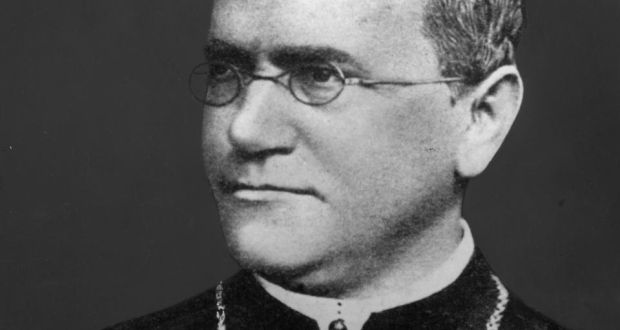
How Gregor Mendel discovered the existence of genes
[We cant do it yet, but examining the DNA of someone should allow us to to construct the DNA of BOTH of their parents from only one offspring. Microscopic jigsaw and probability stats may give a way to discount the mutations using maths and retrodict successfully, using data bases on the environment past and present.]
"f you have ever noticed that children resemble their parents, then you have made a fundamental observation about genetics. Genetics concerns itself largely with heritability: the passage of traits from parents to offspring. Early geneticists wondered how characteristics are passed from one generation to the next and ultimately discovered a unifying thread linking all biological life here.
The first scientist to make serious inroads into these big questions was Gregor Mendel, a monk living in Brno in the present-day Czech Republic in the mid-19th century. The word “gene” hadn’t been invented and it was little more than a hazy concept with no physical basis.

life or events?
The prevailing view at the time was that biological inheritance was a kind of blending process, a bit like mixing paint. This didn’t seem too bad a hypothesis at first. Each of us obviously has characteristics from both parents.
However, when you mix paint colours you end up with a muddy brown with no way to ever return to the individual colours. Biological inheritance through blending leaves no way for brown-haired parents to sometimes have blond-haired children, and no way to get faster, taller, better or fitter. In fact, evolution just wouldn’t work.
Mendel asked a beautifully simple question: what do you get if you cross a true-bred tall plant with a true-bred short plant? And then what happens in the next generation?">> more
http://www.irishtime...genes-1.2071087

Edited by stopgam, 22 January 2015 - 04:21 AM.
Julia36
22 Jan 2015
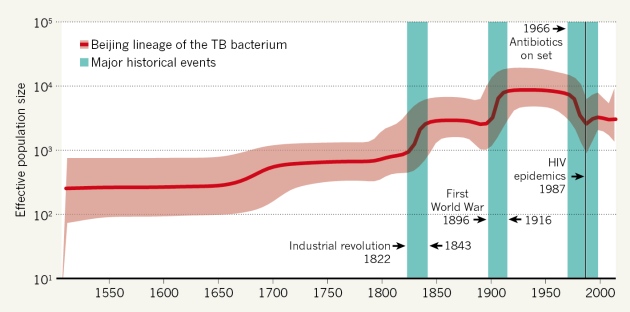
Tuberculosis genomes track human history

[Another data base of millions being built. This tracks one killer disease.
The environment makes viruses mutate. Like dried up river beds that tell where and what water flowed, and when, the examination of viruses could lead to accurate plots of the past.
Like tree rings we can learn a lot from the environment they have lived through. By itself its just interesting,. Added to other data bases the past may be described in enough detail to map out anyone who has lived..ready to resurrect t them with nanobots.]

article on TB>>
"From the dawn of agriculture to the fall of the Soviet Union, major events in human history have left marks in the DNA of the bacterium that causes tuberculosis (TB). A study of nearly 5,000 samples of Mycobacterium tuberculosis from around the world shows how a lineage of the bacterium that emerged thousands of years ago in Asia has since become a global killer that is widely resistant to antibiotic drugs1.">>> more
good article!
http://www.nature.co...history-1.16733

Edited by stopgam, 22 January 2015 - 04:04 AM.
Julia36
22 Jan 2015
[The conversations you have are not outside the laws of physics by which they were brought into being. This is conscious engineering of memes, but conscious means inevitable as well as self-reflective. Nothing is impossible to retrodict. nothing can be hidden...and it doesn't matter how long it takes to the dead. When we rise only a subjective moment will have passed for us.]

Edited by stopgam, 22 January 2015 - 05:13 AM.
Julia36
22 Jan 2015
more
Durham University Is Building A Simulated Universe Inside A Super Computer


A team of scientists from Durham is building a universe in a box.
The team, based at Durham University, is attempting to build a simulated universe on a comparable scale with a sizeable chunk of our own reality.
The supercomputer experiment known as EAGLE (Evolution and Assembly of GaLaxies and their Environments) will run experiments on the simulation on a scale that isn't possible in real life - for instance by modelling the known effects of dark matter and dark energy, and seeing if the result is anything that looks like the universe we can observe.
In a Reddit AskMeAnything Q&A the team made clear that the simulation (which you can explore here) is only an approximation of the universe. In fact, "the smallest particles in the simulation have the mass of a million suns". But the result is still impressive - a simulated cube about 300 million light years on one side. ("This is big enough to provide a whole zoo of different galaxy shapes and sizes, like the ones we see in the real universe.")"
more
+ VIDEO

http://www.huffingto..._n_6484878.html
If we can map & simulate a universe, we can do a man!
![]()
Edited by stopgam, 22 January 2015 - 07:55 AM.
platypus
22 Jan 2015
AI is nice but I think the holy grail would be AC = Artificial Consciousness. Stopgam, got any predictions on when computers become conscious? What technologies might enable AC in computers?
Julia36
22 Jan 2015
AI is nice but I think the holy grail would be AC = Artificial Consciousness. Stopgam, got any predictions on when computers become conscious? What technologies might enable AC in computers?

I'm not sure they're different?
We have to agree what consciousness is, good enough to engineer it
.Consciousness may be a collective of weak A.I.'s.
I guess consciousness is the workings of the brain, and there are many of those that can be done in software now, eg seeing, reasoning, predicting, context matching, metaphore.
Consciousness may be sensation but thinking?
senses give us 'feeling' with reaction. In engineering terms is it relevant. The self is argued to be a mirage or high level description of a person. as you get more programmes running the highest may be Civilisation.
It is reasonably certain we'll map the brain. Many labs are doing bits of it.
AS to when that's achieved, my guess is early 2020's based on progress in A.I. and measurement scanning, but I dunno.
Could switching off single gene extend life by 12 years?

http://www.telegraph...y-12-years.html
"Switching off a single gene could extend life by 12 years and make elderly people fitter, scientists have suggested.
The gene called Myc is important in cell division, growth and death and when it is overactive it can lead to cancer.
Now scientists have discovered that limiting the gene in mice helped the animals live for 15 per cent longer without suffering any ill effects, the first time it has been shown in mammals.
Not only did the mice live longer but they were fitter and did not develop age-related conditions such as osteoporosis, cognitive impairment or decreased metabolism. And they had a healthier immune system. The only noticeable difference was that the mice were smaller than usual.
Researchers at Brown University in the US believe the same mechanism could improve the health and lifespan of humans. A 15 per cent increase in longevity for the average Briton would add 12 years to their " more>>
see also:

I dont have anything to add to the Quantum Archaeology debate. It is self evident it's axioms are being proofed by discovery and advances. My guess @ present is 10-15 years before human resurrections begin but I may have intuitively misjudged the speed of change.
Edited by stopgam, 22 January 2015 - 09:56 PM.
platypus
23 Jan 2015
AI is nice but I think the holy grail would be AC = Artificial Consciousness. Stopgam, got any predictions on when computers become conscious? What technologies might enable AC in computers?
I'm not sure they're different?
We have to agree what consciousness is, good enough to engineer it
.Consciousness may be a collective of weak A.I.'s.
I guess consciousness is the workings of the brain, and there are many of those that can be done in software now, eg seeing, reasoning, predicting, context matching, metaphore.
Consciousness may be sensation but thinking?
senses give us 'feeling' with reaction. In engineering terms is it relevant. The self is argued to be a mirage or high level description of a person. as you get more programmes running the highest may be Civilisation.
It is reasonably certain we'll map the brain. Many labs are doing bits of it.
AS to when that's achieved, my guess is early 2020's based on progress in A.I. and measurement scanning, but I dunno.
The problem is that nobody really understand why we are conscious (see https://en.wikipedia...sophical_zombie), so it's also hard to say why and when a computer would be conscious. Note that this is not about self-consciousness, which is a higher level construction, but rather the question why people *experience* anything at all.
Julia36
24 Jan 2015
AI is nice but I think the holy grail would be AC = Artificial Consciousness. Stopgam, got any predictions on when computers become conscious? What technologies might enable AC in computers?
I'm not sure they're different?
We have to agree what consciousness is, good enough to engineer it
.Consciousness may be a collective of weak A.I.'s.
I guess consciousness is the workings of the brain, and there are many of those that can be done in software now, eg seeing, reasoning, predicting, context matching, metaphore.
Consciousness may be sensation but thinking?
senses give us 'feeling' with reaction. In engineering terms is it relevant. The self is argued to be a mirage or high level description of a person. as you get more programmes running the highest may be Civilisation.
It is reasonably certain we'll map the brain. Many labs are doing bits of it.
AS to when that's achieved, my guess is early 2020's based on progress in A.I. and measurement scanning, but I dunno.
The problem is that nobody really understand why we are conscious (see https://en.wikipedia...sophical_zombie), so it's also hard to say why and when a computer would be conscious. Note that this is not about self-consciousness, which is a higher level construction, but rather the question why people *experience* anything at all.
Ho! That revolving chestnut cul-de-sac! I side-step it for engineering increasingly intelligent systems as weak A.I. or General intelligence

http://waitbutwhy.co...volution-1.html
Edited by stopgam, 24 January 2015 - 11:52 AM.
platypus
25 Jan 2015
The problem is that nobody really understand why we are conscious (see https://en.wikipedia...sophical_zombie), so it's also hard to say why and when a computer would be conscious. Note that this is not about self-consciousness, which is a higher level construction, but rather the question why people *experience* anything at all.
Ho! That revolving chestnut cul-de-sac! I side-step it for engineering increasingly intelligent systems as weak A.I. or General intelligence
Don't you think consciousness matters? Conscious intelligent machines would be a new life-form..