C60 experiments @ home
HighDesertWizard
15 Jun 2012
Turnbuckle... Do you think the condition you had could have been Rhabdomyolysis? (I'd never heard of this before.)
http://www.adr.org.u...insISOP2007.pdf
Here is a brief discussion of Rhabdomyolysis and Statins along with what appears to be an informed discussion about CoQ10 as being beneficial. Spacedoc, on another page, also discusses the benefit of PQQ.
http://www.spacedoc....bdomyolysis.htm
Rhabdomyolysis appears to be a relatively rare negative side effect of statin usage. If it wasn't Rhabdomyolysis, any other thoughts about what it might have been?
Thanks!
Edited by wccaguy, 15 June 2012 - 02:29 PM.
Turnbuckle
15 Jun 2012
Figuring out what the observations are that are great leads to scientific explanatory study evidence is a difficult thing. I think Turnbuckle's muscle/exercise exhaustion recovery is a great potential lead even if it was unfortunate for him that he experienced the condition. That's why I've asked about the condition a few times: If we know what that condition actually was, we can "reverse engineer" what kinds of biological functions must have occurred to reverse the condition so quickly. That's why I'm asking again about what the condition was...
Turnbuckle... Do you think the condition you had could have been Rhabdomyolysis? (I'd never heard of this before.)
Rhabdomyolysis appears to be a relatively rare negative side effect of statin usage. If it wasn't Rhabdomyolysis, any other thoughts about what it might have been?
Thanks!
Nope, wasn't that either.
As to the question of how C60 works (assuming that it works for humans), if it's no more than an antioxidant effect then there should be no problem with taking it long term. However, if it's a methylation inhibitor as well, then long term use may undo any good it does initially and may cause problems that will be long lasting if not permanent. A week's continuous exposure seems safe from the rat trial but the theoretical possibility of it becoming counter-productive should be of interest to anyone planning on experimenting with it long term.
zorba990
15 Jun 2012
http://www.bioportfo...Fish-Brain.html
For glutathione (GSH), an increase (p < 0.05) was registered in cells exposed to C(60) without PUFAs pre-treatment and in the C(60) group pre-treated with DHA. Overall C(60) appears to play an antioxidant role that is modulated by PUFA, taking into account its effects on intracellular ROS concentration and MDA levels. Results also suggest that C(60) influences GSH synthesis, as showed for the augmented levels of this antioxidant and also for the lowering of the intracellular cysteine concentration.
Anthony_Loera
15 Jun 2012
Biophysical 250 states that the Reference Range (or what they consider normal range in a human) for TNF-a is the following:
Normal Range:
Tumor Necrosis Factor-Alpha is "< 8.7 pg/mL"
My personal test shows: (in March of 2012)
Tumor Necrosis Factor-Alpha is "15 pg/mL"
Lets see if this TNF-a number changes it in any way on my next Biophysical.
Cheers
A
Anthony_Loera
15 Jun 2012
I suppose after eradicating that bacteria (which I recently did with a prescription and res), it could lower the TNF-a, couldn't it?
Well... lets see what changes anyway (if any):
My full (100 Page Biophysical Report) is here, and yes I will be 41 this August, so I am still a young chap:
https://www.revgenet...era 3-29-12.pdf
If you want to do one of these, let me know...
Cheers
A
Edited by Anthony_Loera, 15 June 2012 - 08:21 PM.
jg42122
15 Jun 2012
Anthony_Loera
15 Jun 2012
A
smithx
15 Jun 2012
In the second of two youtube videos she made last year, Cynthia Kenyon says that a key to Extreme Longevity is to keep from being overtaken by tumors... FOXO, P53, IGF1, among other genes, are key. Management of apoptosis and mitosis is critical, so says she, here...
http://www.youtube.com/watch?v=HxfLm30FHwA
This was a very interesting video series, thanks for the link.
Based on what Kenyon is saying, it seems more likely that if C60 is increasing longevity by doing something to mitochondria (which there is no evidence for so far), it's more likely to be either interfering with mitochondrial metabolism or sopping up free radicals.
Kenyon mentions that animals with mitochondrial mutations which slowed down metabolism lived longer, and she thinks this may be because mitochondrial metabolism creates damage. So slowing down mitochondrial metabolism or reducing the damage it causes would both tend to extend life.
If C60 does extend lifespan and it's not through a mitochondrial mechanism, another possibility is that it's interfering with insulin or IGF-1 receptors somehow.
But my bet at the moment, since there's evidence that C60 can function as an antioxidant, is that it ends up in the membranes, including the mitochondrial membranes, and reduces the metabolic damage.
maxwatt
15 Jun 2012
smithx
15 Jun 2012
I think C60 may be restoring the mitochondria to a "younger" state where they don't generate as many free radicals, or may just be sopping up the junk produced by the older mitochondria, reducing damage.
But another possibility is that it's interfering with mitochondrial metabolism such that the mitochondria actually just do less. This would also tend to extend lifespan, according to Kenyon's cited research.
If that were the case, we'd expect C60 treated mice to be less energetic, and there could be other undesirable side effects -- lifespan might be increased at the expense of quality of life.
I'd hope for the former explanation, but the latter is a possibility too (as is the possibility that the original rat experiment can't be duplicated).
Another reason to be cautious.
Edited by smithx, 15 June 2012 - 11:57 PM.
maxwatt
16 Jun 2012
I think if it makes mitochondria less efficient, it will show up as lower activity levels. or as reduced power output at maximum exertion. This would show in mice in a swimming-to-exhaustion challenge, or with a roto-rod test (how long a mouse can hang on to a rotating rod.) in human athletes is would be reported as lower power output. If any serious cyclists are taking it, they would notice such an effect in short order.
NewtonPulsifer
16 Jun 2012
So if the C60 is acting like the tagged nucleides and being recycled, it looks like the C60 might have something more like the 10 day half life of the nucleides in the cell. Also, since the mitochondria are much shorter lived than previously believed, a quick response wouldn't be unexpected, whether epigenetic or as a SOD mimetic.
Study link:
Mitochondrial turnover in liver is fast in vivo and is accelerated by dietary restriction: application of a simple dynamic model
http://www.ncbi.nlm....les/PMC2659384/
Edited by NewtonPulsifer, 16 June 2012 - 03:54 AM.
niner
16 Jun 2012
Biochem Biophys Res Commun. 2002 May 31;294(1):116-9.
Cellular localisation of a water-soluble fullerene derivative.
Foley S, Crowley C, Smaihi M, Bonfils C, Erlanger BF, Seta P, Larroque C.
I.E.M. UMR 5635 CNRS, 1919 route de Mende, 34293, Montpellier Cedex 5, France.
Fullerenes are a new class of compounds with potential uses in biology and medicine and many insights were made in the knowledge of their interaction with various biological systems. However, their interaction with organised living systems as well as the site of their potential action remains unclear. In this work, we have demonstrated that a fullerene derivative could cross the external cellular membrane and it localises preferentially to the mitochondria. We propose that our finding supports the potential use of fullerenes as drug delivery agents as their structure mimics that of clathrin known to mediate endocytosis.
PMID: 12054749
Using a 14C-labeled malonate derivative, they quantified the location within distinct cellular compartments. The counts were found in the following order:
1) Mitochondria
2) Other membranes
3) Microsomes
4) Cytosol
The pdf is here. This paper was one of many great finds by Metrodorus, from early in this thread.
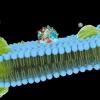
As to what fullerenes do in the mitochondria, we know from Laura Dugan's work that other fullerene compounds are SOD mimetics, and that they are capable of dismutating superoxide. We know that superoxide is produced during mitochondrial respiration. We know from Cataldo's spectroscopic investigations that C60 forms adducts with unsaturated fatty acids such as those found in olive oil. Since fatty acids like this are components of biological membranes, it is reasonable to assume that the adduct, like other C60 analogs, would localize to membranes. I suppose it could be argued that we don't know that will happen until such time as someone synthesizes a labeled version of the fatty acid adduct, but it's hardly a leap. Certainly not in the context of other mechanistic speculations that involve steps along the lines of "and then a miracle happens"...
JohnD60
16 Jun 2012
thanks. I tried researching mito half lifes about three years ago, and found widely varying rates that did not make sense. Unfortunately it reinforces my bias that most medical research experiments are flawedApologies if this is old news (it is new to me), but it looks like mitochondrial lifespan has been overestimated in many old studies. Radiolabeling is showing 10 day half lives if you check out 45 year old papers.....but it turns out that the tagged nucleides are simply being re-utilized by the cell extensively. A more recent study measured half life at 1.83 days, down to 1.16 days with calorie restriction (in a mouse liver) by taking this into account. That's a 5-6 fold reduction.
So if the C60 is acting like the tagged nucleides and being recycled, it looks like the C60 might have something more like the 10 day half life of the nucleides in the cell. Also, since the mitochondria are much shorter lived than previously believed, a quick response wouldn't be unexpected, whether epigenetic or as a SOD mimetic.
Study link:
Mitochondrial turnover in liver is fast in vivo and is accelerated by dietary restriction: application of a simple dynamic model
http://www.ncbi.nlm....les/PMC2659384/
If the C60 is being recycled, I don't see why it would not be recycled indefinitely.
Edited by JohnD60, 16 June 2012 - 04:44 AM.
Turnbuckle
16 Jun 2012
If the C60 is being recycled, I don't see why it would not be recycled indefinitely.
Antioxidants are oxidized by radicals and thus wear out. They don't last that long unless there is a stronger reducing agent around to recycle them. So to explain the persistent effects of C60 by an antioxidant theory, you need an efficient method of physically recycling it through hundreds of mitochondrial lifetimes, and yet another method of chemically recycling it each time.
Metrodorus
16 Jun 2012
ftp://www.ce.cmu.edu/mleitch/Public/GVL%20Combined%20Library.Data/PDF/tissue-0550702848/tissue.pdf
It details the organs where a radiotyped fullerene derivative ended up in the body, its bio-persistence, and raises another issue that I believe to date has not been discussed re fullerene:
We know our olive oil fullerene complex is absorbed.
But, in the words of Bullard-Dillard
"Is the fullerene cleaved back to its parent C60 in vivo?"
The question remains unanswered in subsequent research, I believe.
It would,in pristine form, be more free to act as a SOD mimetic,or, in the other plausible mode of operation, physically (not chemically) block ROS access to the electron transport chain within mitochondria.
Is it is stripped back to pristine form,this raises another question:
Is the new naked fullerene now going to be free to react and form all manner of new adducts with biological molecules? May we actually have novel adducts that form in vivo?
Metrodorus
16 Jun 2012
Antioxidants are oxidized by radicals and thus wear out.
Turnbuckle - this is one of the interesting things about fullerene as an antioxidant.
http://www.ncbi.nlm....les/PMC2676811/
See the section under 'anti-oxidant activity'
It does not apparently wear out as such. When acting as an oxidiser ( not as an anti-oxidant) as its action is catalytic. The fullerene "can react with many superoxides without being consumed".
However, it does appear to act as a chemical reagent when acting as an anti-oxidant. It would not 'wear out' as such but all its unpaired electrons would be paired to radicals.
The question, is, does it undergo further reactions, that end up with it being stripped back to its fullerene core, and so undergo new cycles?
In addition, this interesting paper may have been mentioned previously - I certainly read it. It gives a very useful overview, and the first paragraph, warning strongly that pristine fullerene and fullerene adducts are not the same molecules, should be read and taken note of by all of us.
Of course, if fullerene adducts are stripped back to pristine fullerene in vivo, it remains a moot point.
Thirdly, I would like to see a discussion on the organism level effects of bioaccumulation of fullerene in the liver? This appears to be where it primarily bio-accumulates.
Edited by Metrodorus, 16 June 2012 - 12:28 PM.
Metrodorus
16 Jun 2012
http://ir.library.os...2008-22917h.pdf
Studies on Development of Water Soluble Fullerenes and Their Application
Edited by Metrodorus, 16 June 2012 - 01:03 PM.
Turnbuckle
16 Jun 2012
It would,in pristine form, be more free to act as a SOD mimetic,or, in the other plausible mode of operation, physically (not chemically) block ROS access to
Has C60 in its pristine form been shown to be a SOD mimetic?
Metrodorus
16 Jun 2012
See page 74 here:
http://athenaeum.lib....pdf?sequence=1
Title:
Superoxide dismutase
[PDF] from uga.edu
TI Diyunugala - 2008 - ugakr.libs.uga.edu
Turnbuckle
16 Jun 2012
Antioxidants are oxidized by radicals and thus wear out.
Turnbuckle - this is one of the interesting things about fullerene as an antioxidant.
http://www.ncbi.nlm....les/PMC2676811/
See the section under 'anti-oxidant activity'
It does not apparently wear out as such. When acting as an oxidiser ( not as an anti-oxidant) as its action is catalytic. The fullerene "can react with many superoxides without being consumed".
When you go to the reference for this statement you find this: "Photochemically generated benzyl radicals react with C(60) producing radical and nonradical adducts Rn C(60) (R = C(6)H(5)CH(2)) with n = 1 to at least 15. The radical adducts with n = 3 and 5 are stable above 50 degrees C..."
Sounds like it's being consumed after all.
And this, from another paper that refers back to this same statement--
Buckminsterfullerenes, for example, are capable
of adding multiple radicals per molecule; the addition of as many
as 34 methyl radicals to a single C60 sphere has been reported,
leading Krusic et al. (1) to characterize C60 as a ‘‘radical sponge.’’
http://www.pnas.org/...7/9434.full.pdf
Edited by Turnbuckle, 16 June 2012 - 02:16 PM.

niner
16 Jun 2012
The question, is, does it undergo further reactions, that end up with it being stripped back to its fullerene core, and so undergo new cycles?
Not very easily. If the fullerene attaches to an unsaturated fatty acid through a Diels-Alder mechanism, it would form two carbon-carbon bonds. It's hard enough to break carbon carbon bonds under laboratory conditions; I don't see any obvious way it would happen in vivo. If it does happen, it's probably not a major pathway. I think a more likely scenario would be for the fullerene-fatty acid adduct to react with another molecule. In fact, I wouldn't be surprised if a major product of OO/C60 was a bis-adduct, where there were two fatty acids linked by a central C60. Alternatively, once a mono-adduct was situated in a membrane, it would be well positioned to form a link to a second fatty acid from the other side of the membrane. Such a compound would be very strongly membrane bound, and should be a potent membrane former as well.
niner
16 Jun 2012
Antioxidants are oxidized by radicals and thus wear out.
It does not apparently wear out as such. When acting as an oxidiser ( not as an anti-oxidant) as its action is catalytic. The fullerene "can react with many superoxides without being consumed".
When you go to the reference for this statement you find this: "Photochemically generated benzyl radicals react with C(60) producing radical and nonradical adducts Rn C(60) (R = C(6)H(5)CH(2)) with n = 1 to at least 15. The radical adducts with n = 3 and 5 are stable above 50 degrees C..."
Sounds like it's being consumed after all.
And this, from another paper that refers back to this same statement--Buckminsterfullerenes, for example, are capable
of adding multiple radicals per molecule; the addition of as many
as 34 methyl radicals to a single C60 sphere has been reported,
leading Krusic et al. (1) to characterize C60 as a ‘‘radical sponge.’’
I don't think this is happening in vivo. Benzyl and methyl radicals are laboratory species that wouldn't be generated in vivo. (A methyl radical is particularly hard to make.) The in vivo situation is pretty much all oxygen radicals, like superoxide and hydroxyl radicals.
Metrodorus
16 Jun 2012
Many studies report anti viral activity in general, and anti HIV activity in specific..
If it were shown that the oil based fullerene is active against HIV, and that this is a strong effect, one could imagine the development of an oil based viricidal lubricant, which when used either alone,or in combination with an oil-tolerant condom, would be a powerful HIV preventative.
Turnbuckle
16 Jun 2012
Antioxidants are oxidized by radicals and thus wear out.
It does not apparently wear out as such. When acting as an oxidiser ( not as an anti-oxidant) as its action is catalytic. The fullerene "can react with many superoxides without being consumed".
When you go to the reference for this statement you find this: "Photochemically generated benzyl radicals react with C(60) producing radical and nonradical adducts Rn C(60) (R = C(6)H(5)CH(2)) with n = 1 to at least 15. The radical adducts with n = 3 and 5 are stable above 50 degrees C..."
Sounds like it's being consumed after all.
And this, from another paper that refers back to this same statement--Buckminsterfullerenes, for example, are capable
of adding multiple radicals per molecule; the addition of as many
as 34 methyl radicals to a single C60 sphere has been reported,
leading Krusic et al. (1) to characterize C60 as a ‘‘radical sponge.’’
I don't think this is happening in vivo. Benzyl and methyl radicals are laboratory species that wouldn't be generated in vivo. (A methyl radical is particularly hard to make.) The in vivo situation is pretty much all oxygen radicals, like superoxide and hydroxyl radicals.
The point is, if C60 is a radical sponge, then even if it does catalyze some reactions, it will be changed by others and will get used up like other antioxidants get used up.
Metrodorus
16 Jun 2012
http://www.ncbi.nlm....les/PMC2775692/
The key finding was:
C60 significantly suppressed the TNF-α-induced production of proinflammatory cytokines in synovial fibroblasts, synovial infiltrating lymphocytes and macrophagesin vitro.
More detail on free radical quenching by fullerene in this paper:
Biomedical potential of the reactive oxygen species generation and quenching by fullerenes
60</sub>)
[PDF] from tut.f
[PDF] from tut.fi
Z Markovic… - Biomaterials, 2008 - Elsevier
Edited by Metrodorus, 16 June 2012 - 05:02 PM.

jg42122
16 Jun 2012
Turnbuckle
16 Jun 2012
Ok here is my log on the effects I have had from taking it http://www.longecity.../56936-c60-log/
Amazing results, jg!
niner
16 Jun 2012
Surprisingly, C3 regioisomer of tris-malonic C60
derivative was more efficient cytoprotective agent than corresponding
D3 isomer, despite their similar ability for ROS deactivation
and probably due to the better incorporation of the C3
isomer into the lipid membranes [130,140]. This interesting observation
indicates that the overall cytoprotective activity of C60 derivatives
will not only depend on their ROS-scavenging capacity, but
also on the strength of their interaction with cellular membranes.
I think that this is a large part of the OO/C60 effect. The long chain fatty acid adducts should be uniquely suited to localizing the C60 in the mitochondrial membane, and I think that is the essence of the observed effect in rats.
niner
16 Jun 2012
The point is, if C60 is a radical sponge, then even if it does catalyze some reactions, it will be changed by others and will get used up like other antioxidants get used up.
But that will be a slow process if there are no carbon radicals present, and these would be exceedingly rare species in vivo. I would expect that over a span of months or years, the C60 would essentially become 'used up', but I don't think it's going to happen on a rapid timescale.