Frayed Wires, Not Burned-Out Bulbs: Rethinking Motor Neuron Aging
by ChatGPT
One of the most persistent pessimistic claims in discussions of aging is that motor neurons simply “die off” with age, like lightbulbs burning out. If this were true in a literal, large-scale sense, then neuromuscular aging would represent a hard biological ceiling: once a neuron is gone, no currently realistic intervention can replace it.
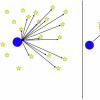
But over the past two decades, a quieter and more hopeful picture has been emerging from neuromuscular research. Much of what we experience as age-related muscle weakness, frailty, and loss of coordination does not appear to stem primarily from widespread motor neuron death. Instead, it reflects a progressive failure of connectivity—the fraying of the communication link between otherwise surviving neurons and their muscle fibers.
This distinction matters profoundly. Dead cells are almost impossible to restore. Dysfunctional connections, by contrast, are something biology repairs throughout life.
The Neuromuscular Junction: Where Aging Shows First
Motor neurons communicate with muscle fibers at specialized synapses called neuromuscular junctions (NMJs). In youth, these junctions are compact, well-aligned, and chemically precise. With age, several things tend to happen:
- Axon terminals partially withdraw from the muscle endplate
- The postsynaptic structure fragments
- Acetylcholine signaling becomes less efficient
- Reinnervation slows and becomes incomplete
- Crucially, in many cases the neuron itself remains alive in the spinal cord. The “bulb” still exists; the “wiring” has degraded.
Research groups at institutions such as Brown University have shown that aging muscle fibers often remain viable but silent, awaiting reconnection. Surviving motor neurons attempt to sprout new branches to reinnervate abandoned fibers, but this compensatory process becomes less reliable with age.
This reframes neuromuscular aging as a problem of maintenance and repair, not simple attrition.
Why the Environment Matters: Molecular Brakes on Repair
If reconnection is biologically possible, why does it fail more often with age?
One major reason appears to be a progressively hostile cellular environment. Chronic low-grade inflammation, altered growth-factor signaling, and changes in the stem-cell niche all reduce the body’s willingness to repair itself.
A particularly important example comes from work by Irina Conboy and colleagues at UC Berkeley, showing that TGF-β1 signaling rises with age and acts as a global brake on tissue repair. Elevated TGF-β1 suppresses stem-cell activity in muscle and nervous tissue alike, making reinnervation slower and less complete.
Pharmacological blockade of this pathway in mice restored more youthful repair behavior in both muscle and brain tissue. This does not mean that a single drug “reverses aging,” but it does demonstrate that age-related decline is at least partly regulated, not inevitable.
What Can Actually Help Mend the “Frays”?
No supplement or drug currently available can directly force a motor neuron to reconnect to a muscle fiber on demand. But several classes of intervention plausibly support the conditions under which reconnection succeeds.
1. Supporting the Signal (Communication Quality)
Acetylcholine is the chemical language of the NMJ. When connections are weak but present, improving this signaling can enhance function:
- High-quality choline donors (e.g., alpha-GPC, citicoline)
- Mild acetylcholinesterase inhibition (e.g., huperzine A)
These do not rebuild connections, but they can stabilize marginal ones.
2. Supporting the Wiring (Neuronal Health and Sprouting)
Some compounds act indirectly by improving the neuron’s capacity to maintain or extend axons:
- Acetyl-L-carnitine (ALCAR) supports mitochondrial energy in neurons and has been studied in peripheral nerve regeneration
- Omega-3 fatty acids (especially DHA) are structural components of synapses and membranes
- Lion’s Mane mushroom, via NGF-related pathways in animal models, may modestly support axonal maintenance
These interventions do not initiate reconnection on their own, but they increase the likelihood that reconnection, once triggered, stabilizes rather than fails.
3. Removing Environmental Brakes
Other interventions act by making the tissue environment more permissive to repair:
- Vitamin D, whose receptors are present at the NMJ, correlates strongly with preserved neuromuscular function
- NAD+ restoration strategies (e.g., NMN, NR, NAM) improve cellular energy and stress resistance in both muscle and neurons
- Anti-inflammatory strategies reduce background noise that interferes with repair signaling
These do not “fix” the wiring, but they stop the environment from actively preventing repair.
The Non-Negotiable Factor: Mechanical Signaling
One conclusion emerges again and again from neuromuscular research: the most powerful stimulus for reinnervation is mechanical use.
When muscles are loaded—especially during slow, controlled lengthening contractions—they release trophic signals (BDNF, GDNF, IGF-1 variants) that actively call motor neurons back to the junction. This is the biological conversation supplements can support but cannot replace.
In this sense, neuromuscular aging resembles infrastructure decay more than system failure. Roads crumble fastest where traffic stops.
Healthspan First, Longevity Second
This framework aligns with the broader healthspan-first philosophy articulated by researchers such as David Sinclair. Preserving connectivity, repair capacity, and functional reserve is not merely about feeling stronger today; it keeps biological options open for future therapies.
If motor neurons were truly disappearing en masse, longevity would face a hard ceiling. The evidence instead suggests something more flexible and more hopeful: aging as a gradual loss of coordination between systems that remain fundamentally alive.
Frayed wiring can be repaired. Burned-out bulbs cannot. And that difference changes everything.